
About Deck Builders Lewiston
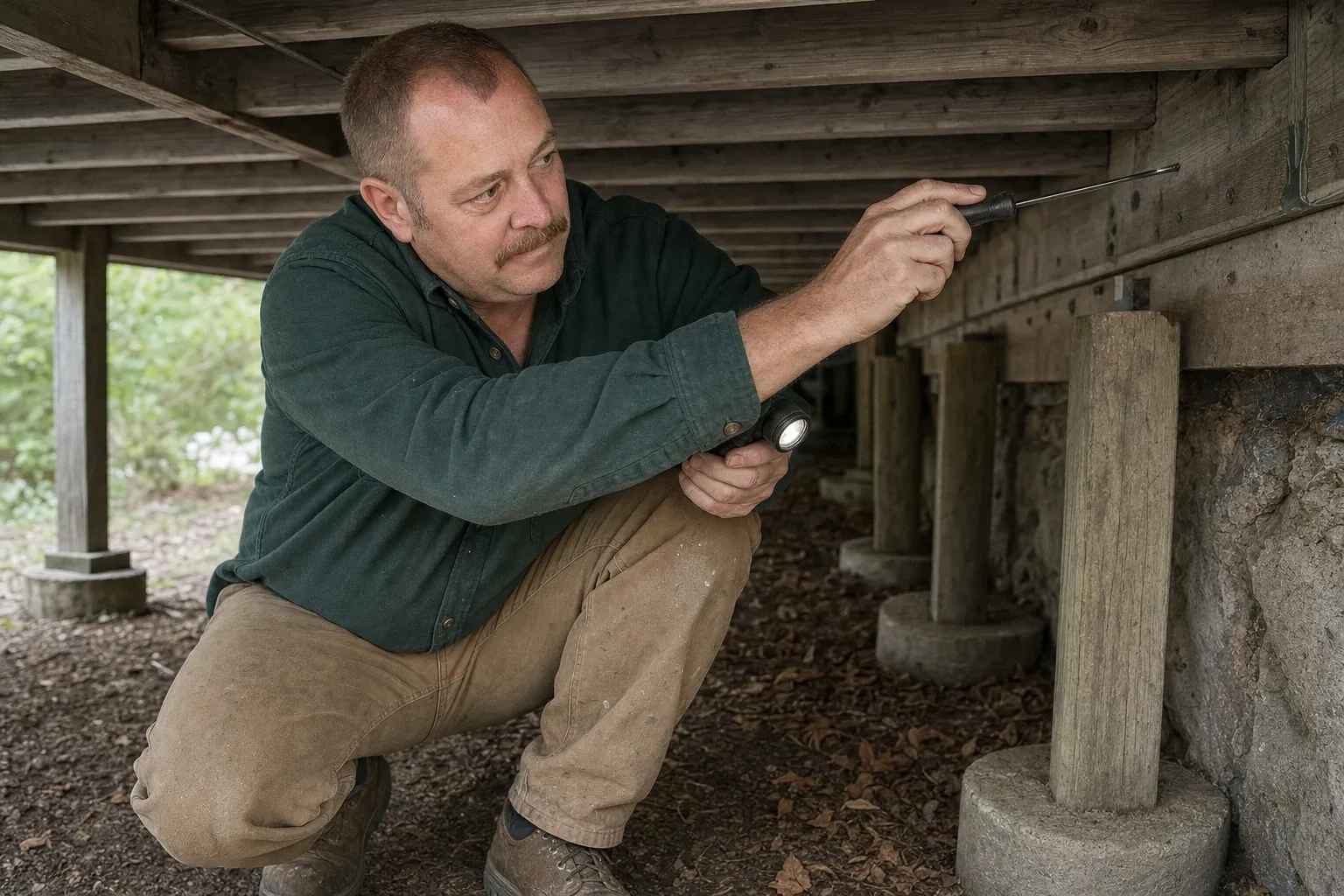
He framed houses in 2001, went to decks full time in 2013, and still starts every job under the old deck.
Jim Hutchins grew up in Greene, still lives there and oversees every job from our office on Main Street in downtown Lewiston. Decks are all we do, and no deck gets a price from us until he has looked at the footings, the ledger bolts and every joist himself.
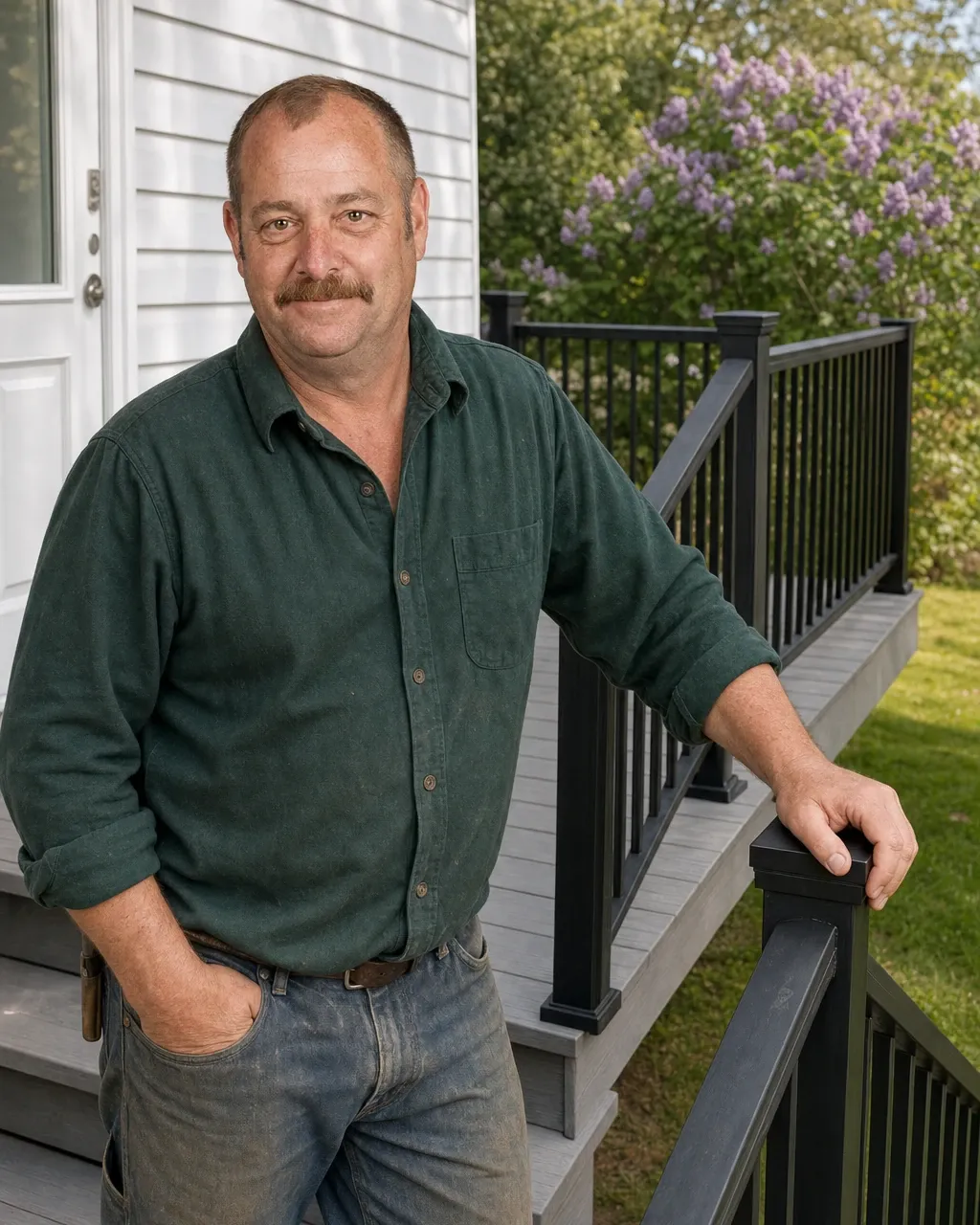
Jim Hutchins
Owner, Deck Builders Lewiston
- 2001first year in construction
- 2013first year building decks only
- Decks only, start to finish
- Free estimate requests
- 22 towns around Lewiston-Auburn
Where Did Jim Hutchins Learn How a Deck Frame Fails?
Jim Hutchins learned how a deck frame fails on the Lewiston framing crews he joined in 2001, after growing up just north of the city in Greene. The crews built walls and floor systems, and floor systems taught him how a load travels from a joist to a beam to a post and down into the ground.
The back porches and decks those crews tore off two- and three-family houses taught him the rest. The rot sat where water stayed: in the ledger against the house, at the top of each post and along the tops of joists under tight rows of boards.
That is how a deck can look solid from the yard and still be soft where it meets the house. Jim checks those hidden places first, because the boards on top say very little about the frame below them.
Why Did Jim Leave House Framing to Build Only Decks?
Jim left house framing for decks in 2013 because a deck frame is the one frame on a house that lives outdoors, and he wanted those frames built to last. From 2013 on, decks have been his whole trade, which is why decks are all we do.
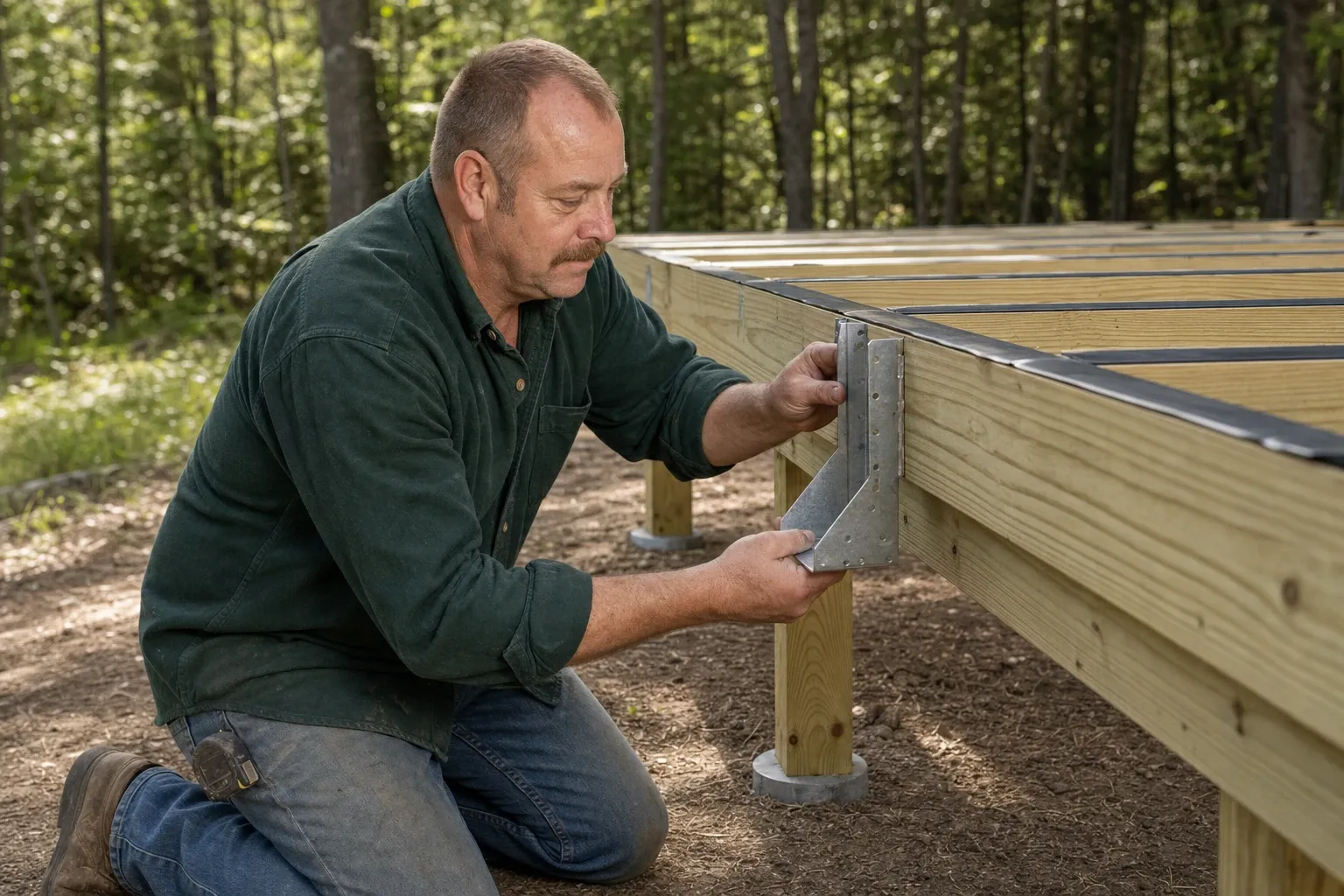
A deck frame in the Androscoggin valley carries snow all winter, then rides out freeze, thaw and a wet spring. We frame heavier than the minimum tables ask, on footings set 4 feet down: helical piles on most jobs, a concrete pier where one is called for.
Joists go 16 inches on center, or 12 under PVC boards, with joist tape or a roll-on coating over the top of every one. Composite boards go down on hidden clips, PVC boards are face-screwed and plugged because PVC moves, and trim covers every cut end.
What Will We Tell You Before Any Boards Come Up?
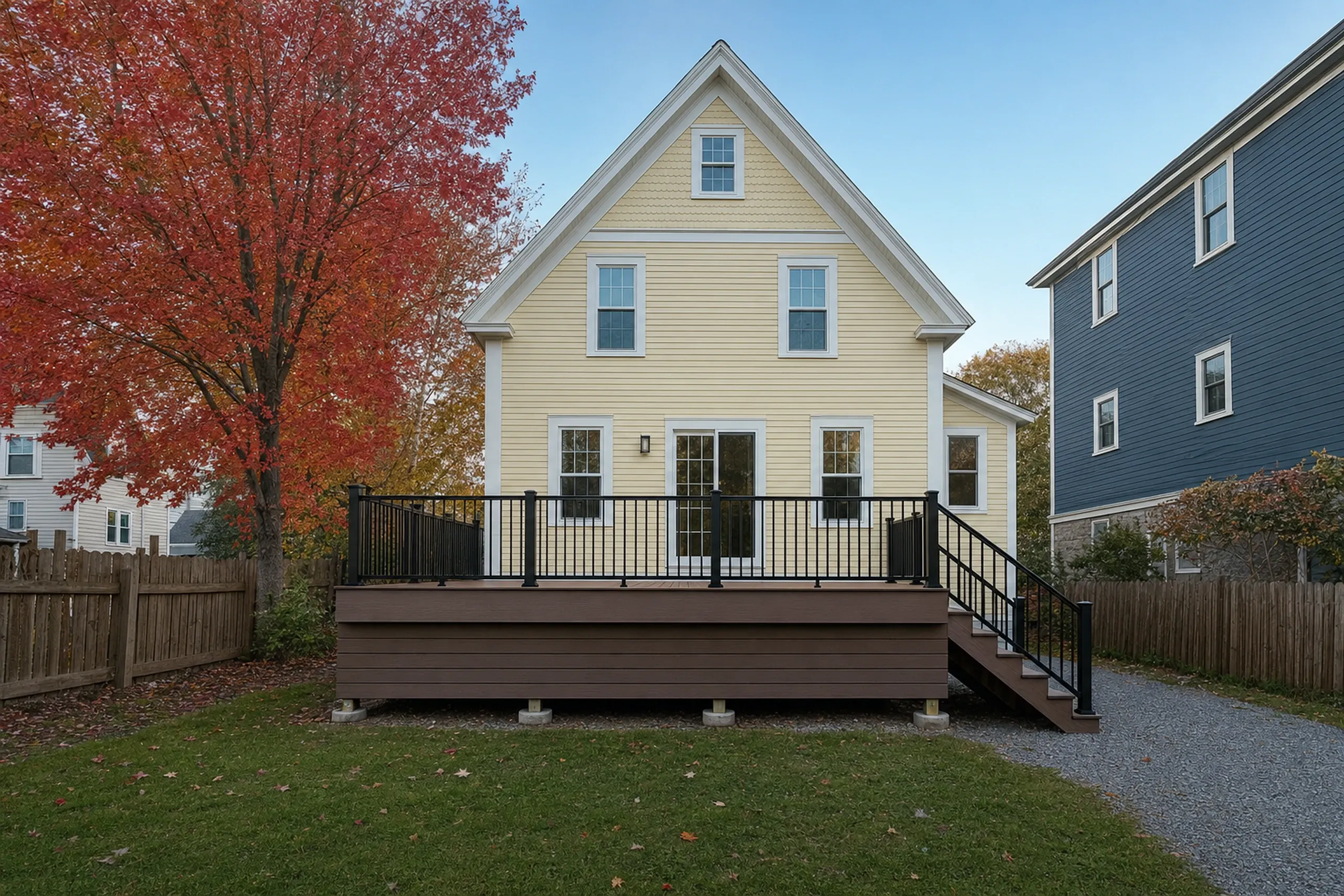
Before any boards come up, we tell you what we found under the old deck and whether that frame can stay. When the footings, the ledger and the joists are sound, you hear that too, and a repair may be the smarter buy.
When the frame is done, we say so plainly and price a new one, because we never lay new boards on an old frame. Framing is the cheapest part of a deck, so saving on it under new composite makes no sense.
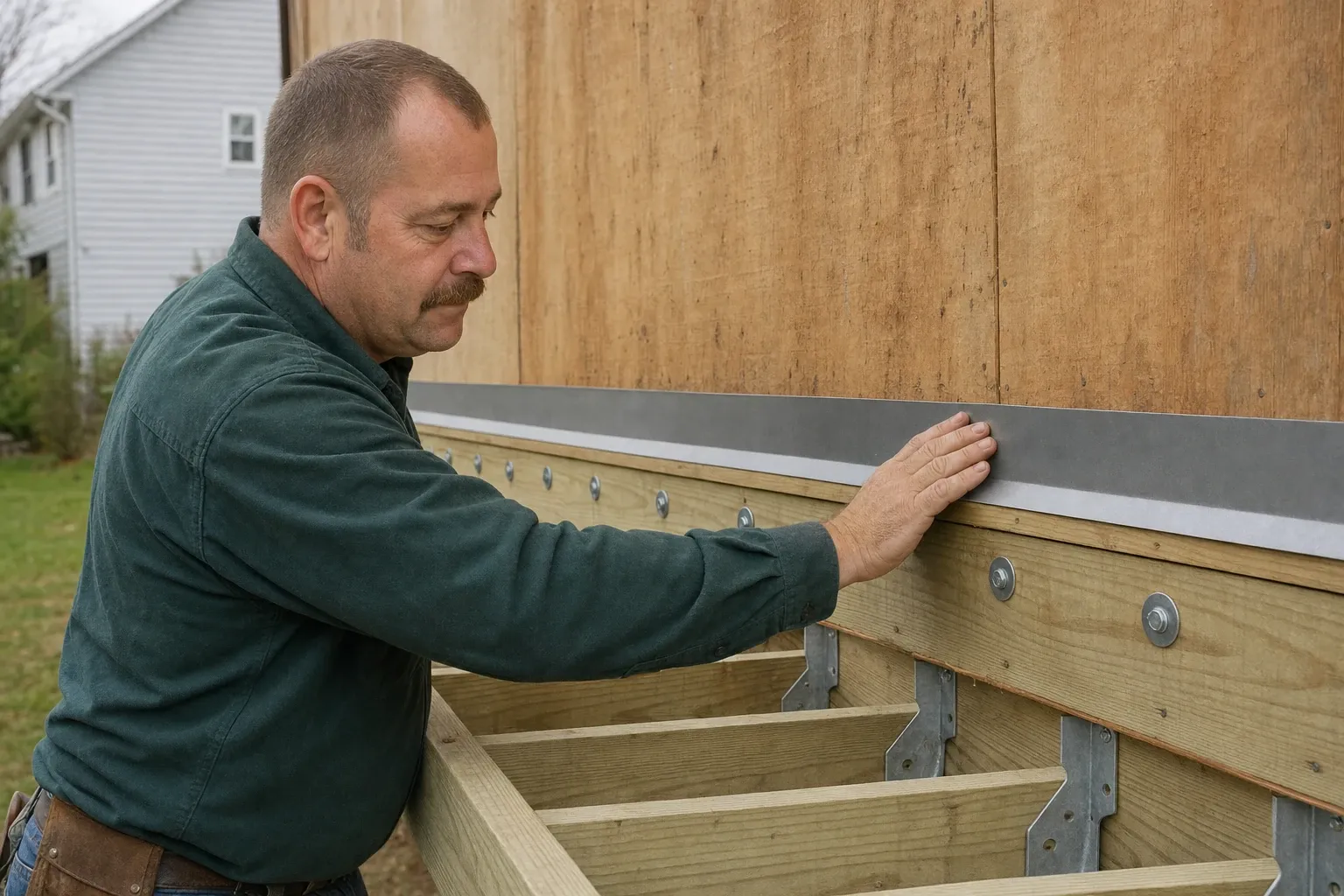
Two other shortcuts are off the table on every job: a deck set on floating blocks and a ledger hung on the house without flashing. The American Wood Council's DCA 6 deck guide calls for corrosion-resistant flashing wherever a ledger meets a wood-framed wall.
How Do We Put a Price on a New Deck?
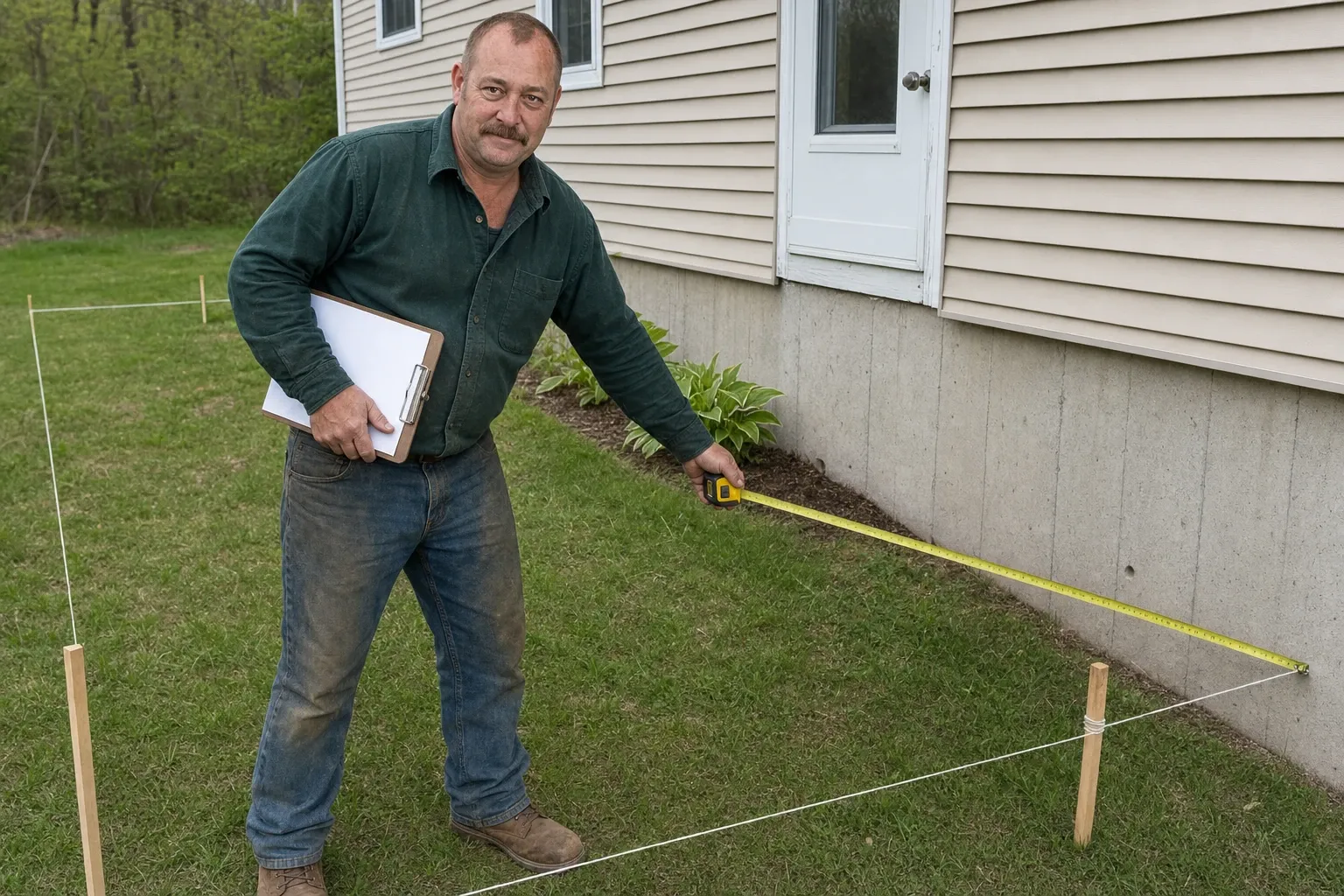
We put a price on a new deck by measuring the yard and the house wall in person and seeing what any old deck leaves behind. The price then weighs what moves a deck's cost most, in this order: a ramp, the stairs and how many, whether usable footings already exist, how complex the layout is and how high the deck sits.
Small decks cost more per square foot than big ones, because the footings cost about the same whatever the size. Going one size bigger often adds little, so it is worth asking us to price the next size up.
The per-square-foot figures on our pages are averages drawn from many quotes, a way to test a budget and never a price for your yard. Your own number comes from your own yard, and nothing is ordered until the contract is signed.
What Should You Know Before Hiring Us for a Deck?
Decks are all we do. We build composite decks and pressure-treated decks, handle deck replacement, deck repair and deck railings, and add the stairs, landings and skirting; porches with a roof and walls, sunrooms, patios and pools go to other trades.
Maine does not license general contractors, so there is no state license for us to show you. What Lewiston does require is a permit for any deck attached to a house, at any size, filed with Planning and Code Enforcement.
Every number goes on paper first. 10 MRSA §1487 puts any home construction job over $3,000 on a written contract we both sign, and it caps the first payment at one third of the contract price.
How Does a Deck Go From Signed Contract to Finished?
A deck goes from signed contract to finished in a fixed order: the permit, the tear-out, the footings and frame, then the boards, the rail and the stairs. We file the permit application whenever the town requires one, and the decision to approve it is the town's alone.
In Lewiston the city's uncovered-deck guide goes in with the application, along with a plot plan drawn to scale. The city's building process then calls for a footing inspection before any concrete is poured, a frame inspection once the framing is in and a final inspection at the end.
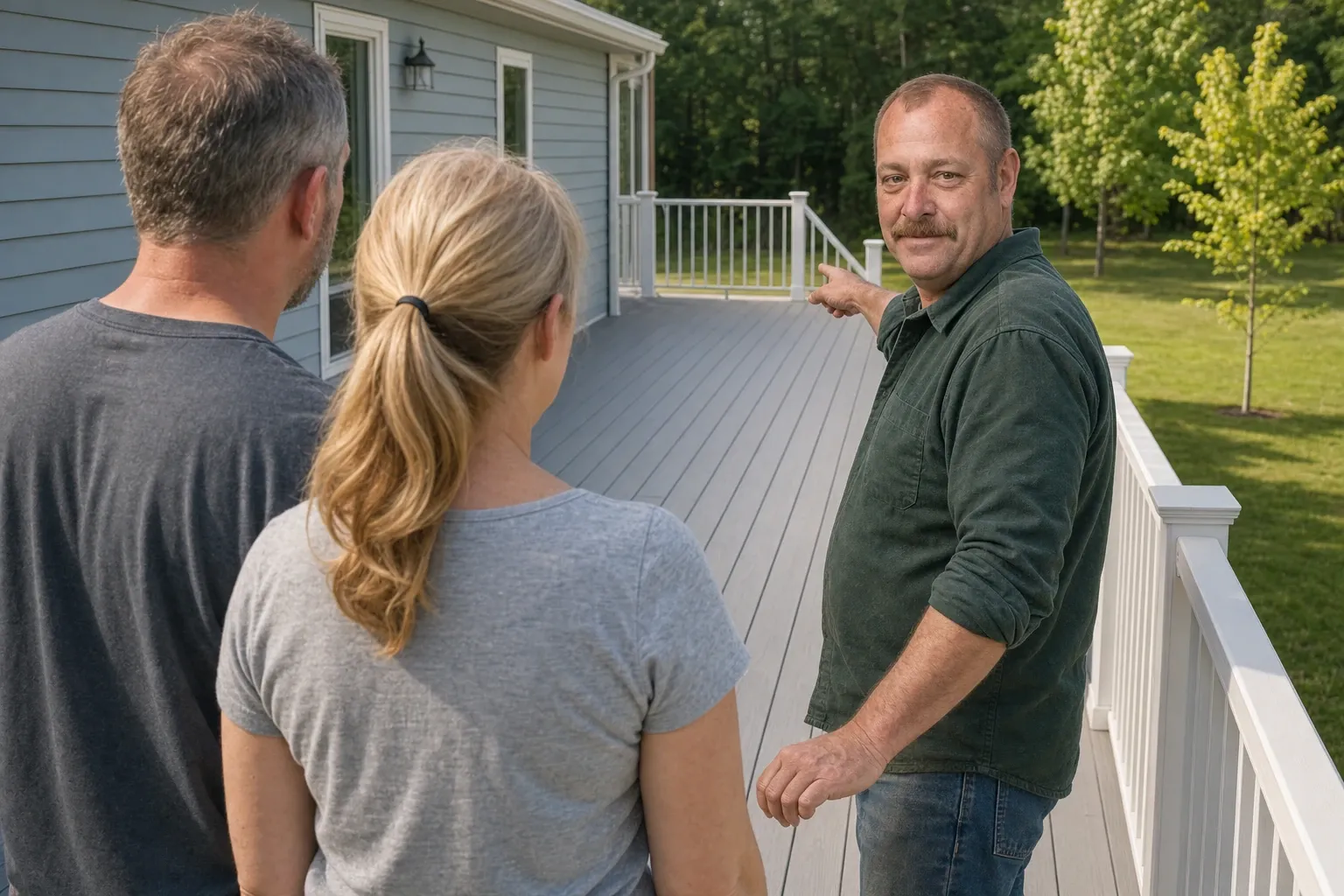
The old deck leaves the yard with us, torn out and hauled away. The job ends with Jim walking across the finished deck at your side, testing the rail and the handrail, and anything you want changed gets talked through right there.
When Can Jim Look Under Your Deck?
Send us the town, the kind of deck job and roughly how high it sits off the ground. Jim will set a time to walk the yard with you, then put the price in writing.