
Experienced Deck Replacement | Deck Builders Lewiston
Deck replacement means tearing the old deck out down to its footings, then building a new one on new or proven footings with a frame sized for your boards. We price the frame before the boards, which is why we get under the old deck at the first visit instead of after the tear-out.
- (207) 386-9863
- 217 Main St, 3rd Floor, Lewiston
- [email protected]
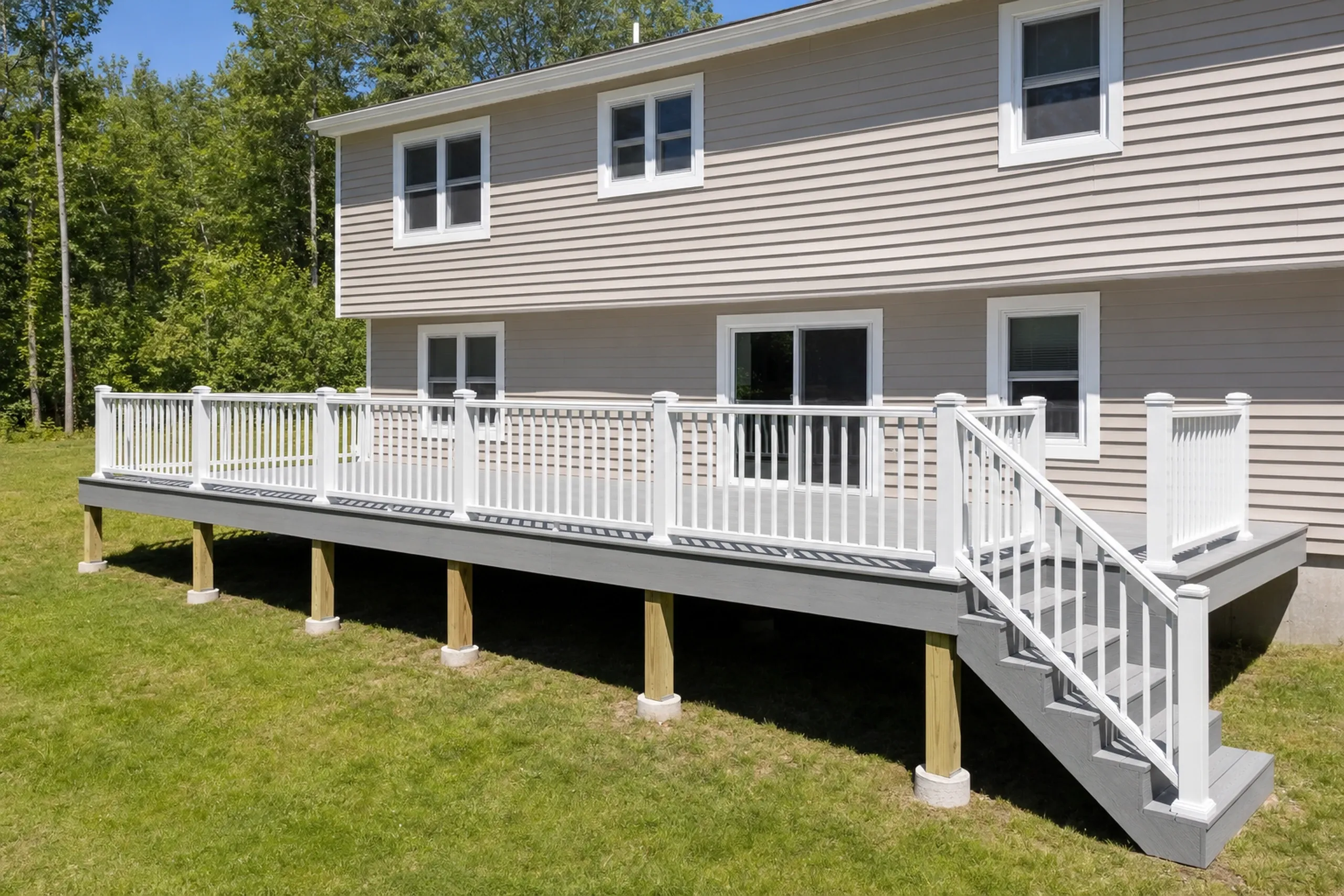
- Decks only, start to finish
- Free estimate requests
- 22 towns around Lewiston-Auburn
- Old deck torn out and hauled away
- Footings and frame checked first
- The frame priced in writing
This page is about deck replacement in the Lewiston-Auburn area: taking a worn deck down to the house wall, checking the band joist behind the old ledger, and building a new deck on new footings and a new frame.
It is for owners of decks that bounce, feel soft, wear a patchwork of swapped boards or pull away from the house. Deck Builders Lewiston will not screw new boards onto an old frame, and the frame is priced at the first visit, before anything comes apart.
Most important: a replacement prices like a new deck plus the tear-out, averaging about $80 per square foot in simple treated wood and from $15,000 in composite across many quotes.
Why Replace a Deck Instead of Resurfacing It?
Replacing a deck beats resurfacing it whenever the frame underneath is worn out, because new boards screwed to old joists cover the rot and the bounce without fixing either. Lumber for the frame is the least expensive part of any deck, which makes it the worst place to cut corners under a new surface.
- The old deck torn out and hauled away, with the wall behind the ledger opened and checked
- Footings tested, then replaced with helical piles turned 4 feet down unless the old ones are deep and sound
- A new frame with tape or a roll-on coating on every joist, hung from a flashed ledger bolted to the house
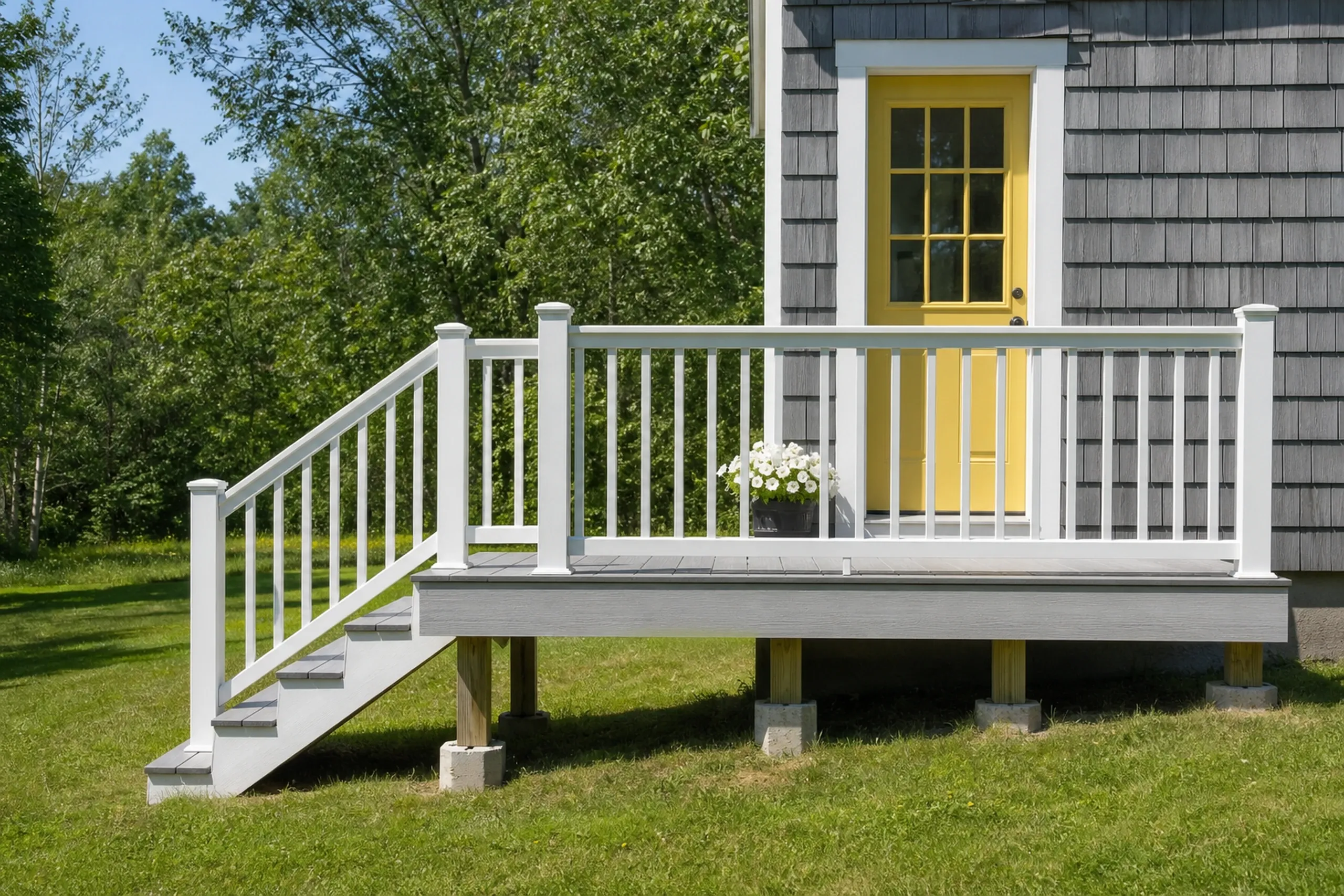
Which deck services go with a replacement?
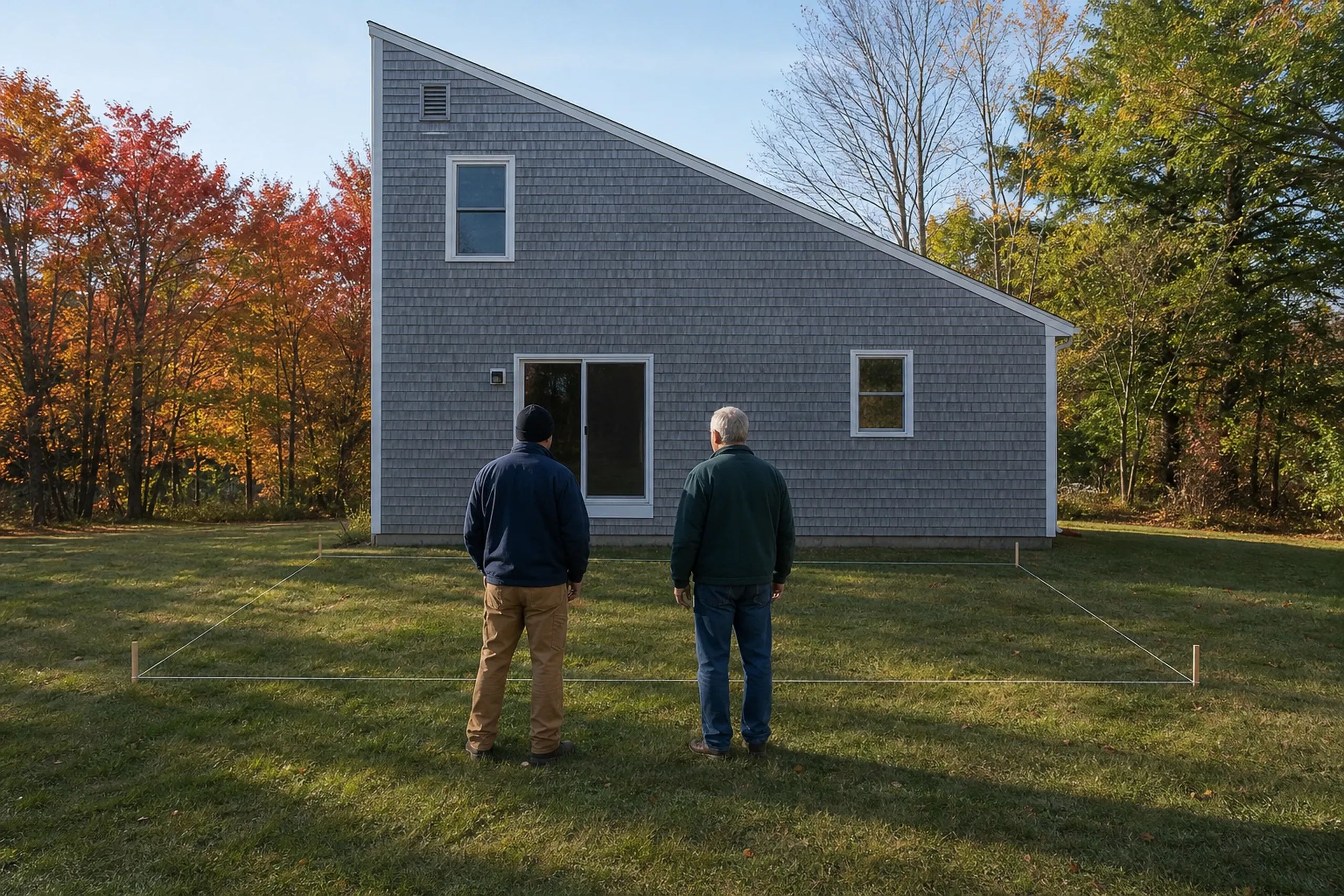 Composite DecksTimberTech, AZEK or Deckorators boards over a frame built heavier than code asks.See Composite Decks
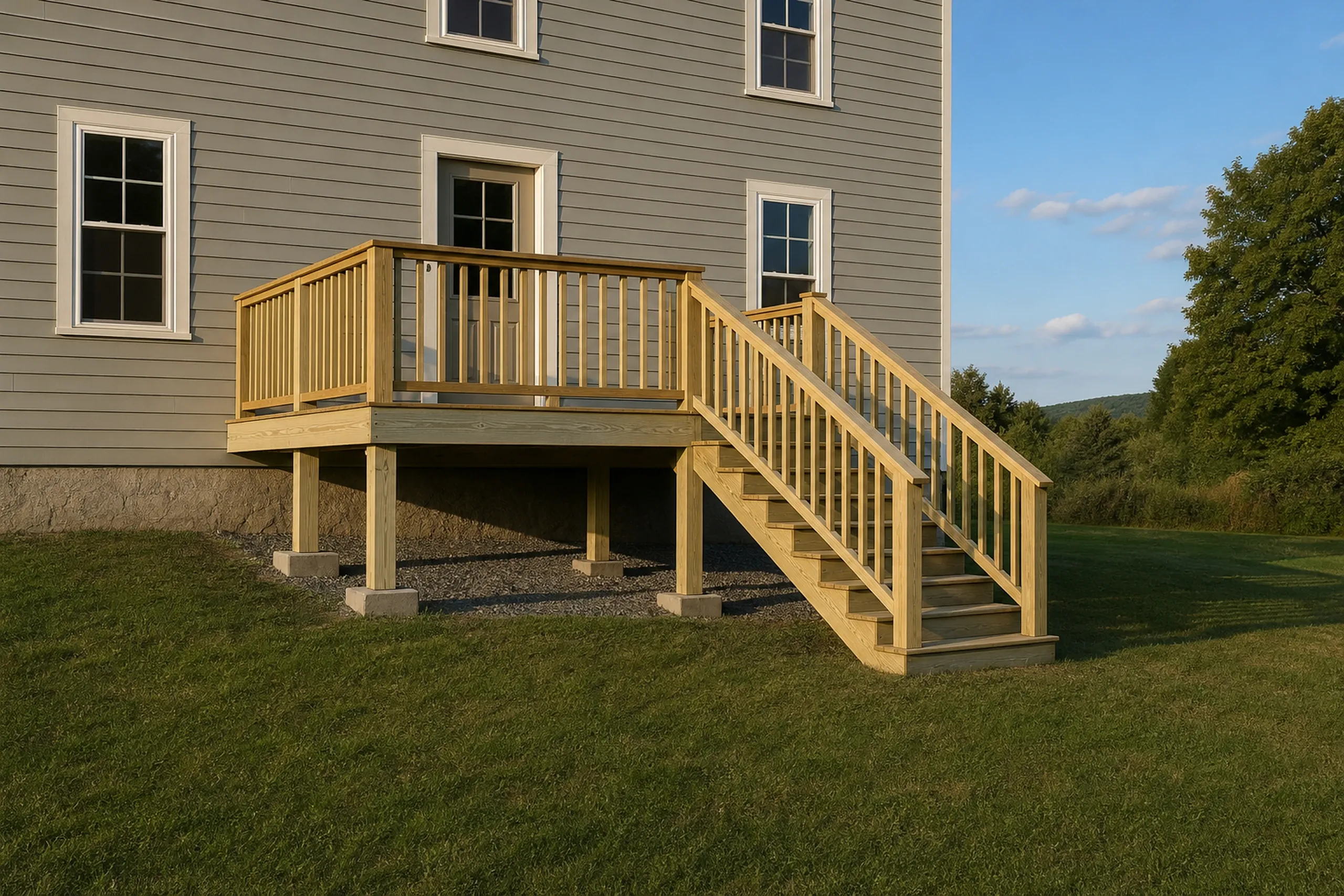 Deck RepairLoose stairs, soft boards and wobbly rails fixed when the frame underneath is sound.See Deck Repair
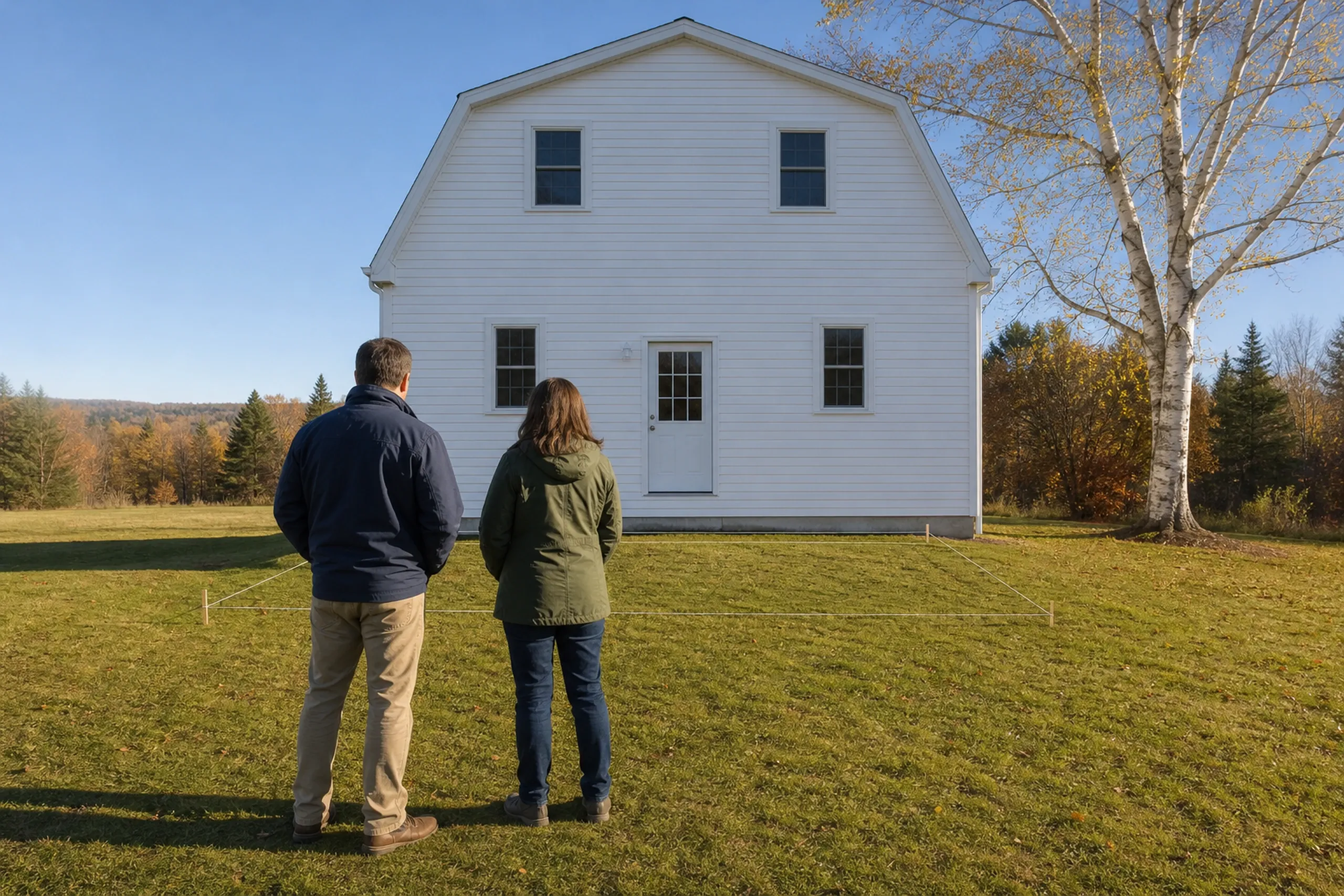 Pressure-Treated DecksThe most affordable deck, framed and decked in treated lumber.See Pressure-Treated Decks
Where do we replace decks?
What Does a Full Deck Replacement Involve?
A full deck replacement moves through three stages: knowing the old deck is done, rebuilding from the footings up, and settling the size and the permit.
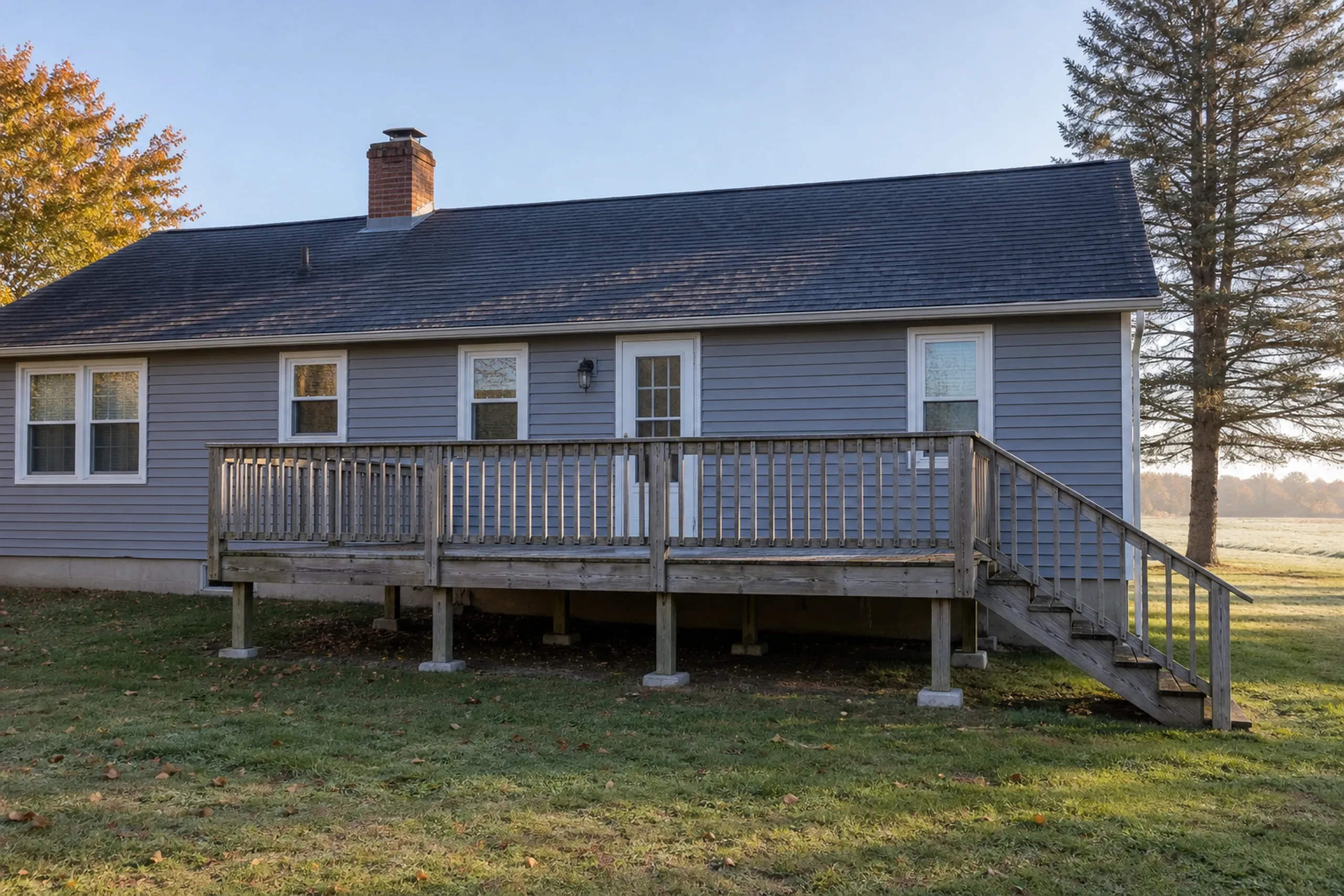
Signs Your Old Deck Is Done
We find a wood deck has usually reached the end of its useful life by about 20 years, and the plainest sign is a patchwork of newer boards swapped in one at a time as old ones turned dangerous. Patching board by board usually means the frame has aged right along with the surface.
Soft spots in the joists or the rim joist, a surface that bounces or sways, a guard that wobbles, posts that have sunk or heaved with the frost, and rust on the joist hangers all point the same way. Trex's resurfacing guide treats even a little orange, brown or red rust on framing hardware as a cause for concern.
The sign that should keep you off the deck is a ledger pulling away from the house, or one held on by nails alone. If nail heads are all you can see holding that board on, NADRA's advice is to treat the deck as unsafe and get it looked at now.
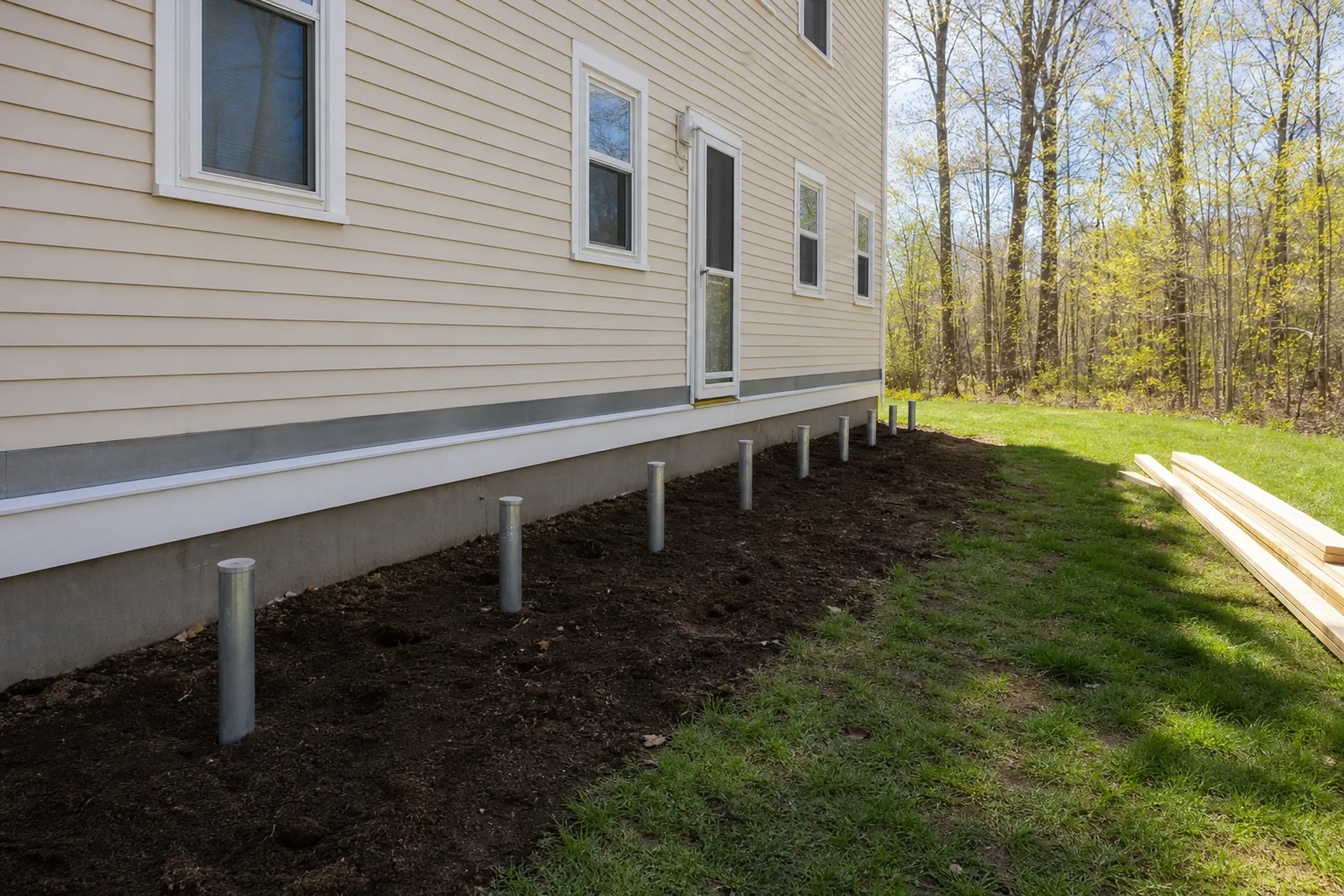
Tear-Out, New Footings and a New Frame
We take the old deck down to the house wall so the area behind the ledger can be opened and the band joist (the house's rim board the ledger bolts into) checked for water damage. A ledger is only as strong as the wood its bolts bite into, so a soft band joist gets fixed first.
Footings that fail our check are replaced, set 4 feet deep and usually on helical piles: steel shafts with screw-shaped plates turned into the ground until they reach a set torque and depth. Where the soil or the load calls for it we pour a concrete pier instead, and we never set a deck on floating blocks.
The new frame hangs on hardware rated for treated lumber, with tape on every joist or FastenMaster's Deck Frame Coating, a roll-on moisture barrier that reaches corners tape cannot. The ledger gets flashing that keeps water off the house band joist, as Maine's adopted code (R507.9.1.3) requires.
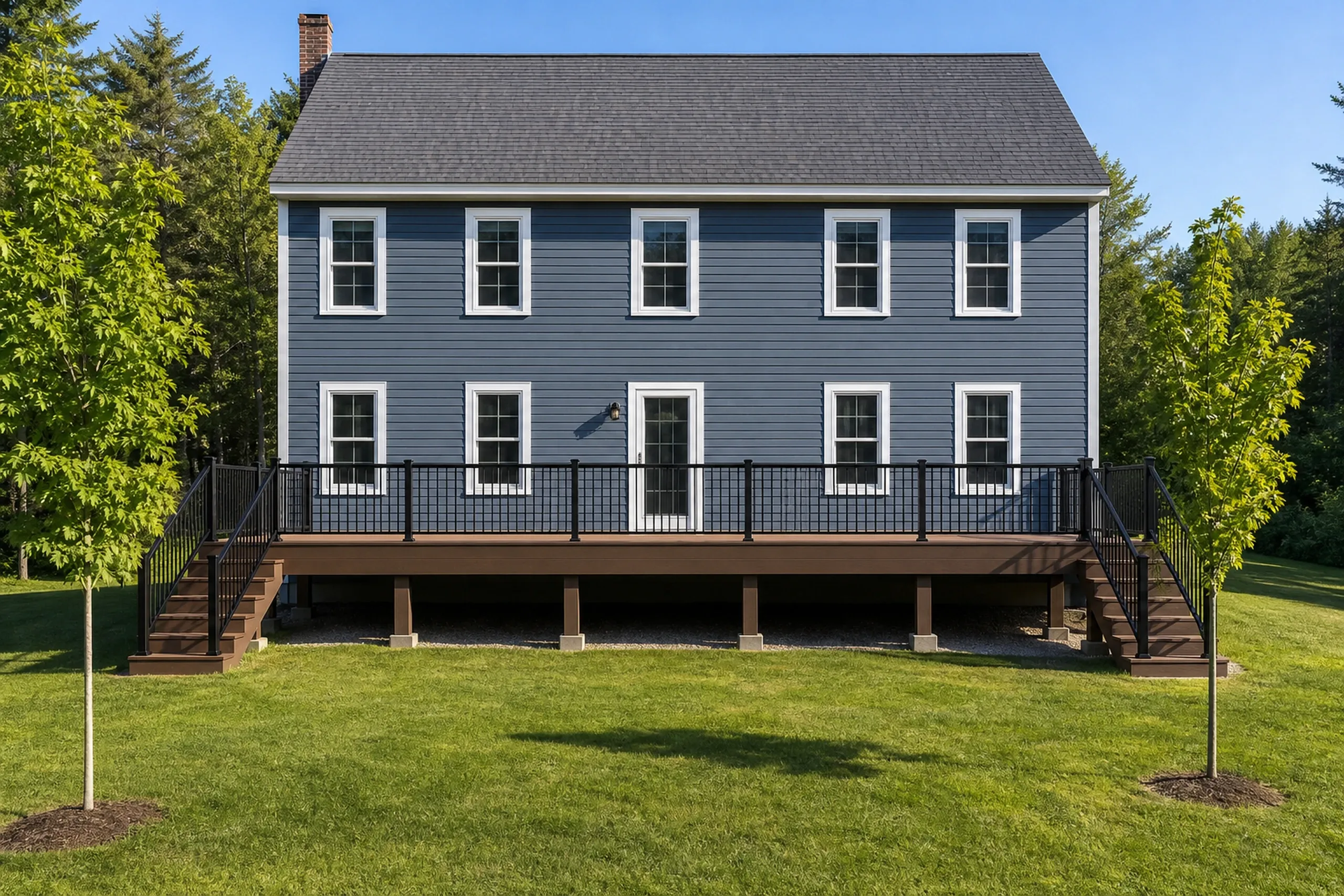
Same Footprint or Bigger, and the Permit
Rebuilding on the same footprint keeps the door height, the stair landing and the yard layout you already know. Going bigger is the cheapest time to add space, since new footings are usually going in either way.
Maine's adopted residential code (R105.1) lists building and demolishing among the reasons to apply for a permit where a town requires one, and its own exemption covers only a detached deck no bigger than 200 square feet, no more than 30 inches above grade, that does not serve a required exit door. We pull the permit, and approval is the town's call.
On a lot near a lake or river, a bigger footprint also meets Maine's shoreland zoning, which each town runs for land within 250 feet of a river or great pond. We check with the town's code officer before drawing a larger deck there.
What Deck Replacement Services Do We Offer?
A replacement with us runs from the first look under the old deck to the town's final inspection.
Maine DEP says burning treated wood is illegal, so the deck we remove leaves your yard with us. The state's code enforcement office adds that owners are responsible for meeting the building code whether or not their town enforces it, and towns that enforce it have used the 2021 IRC since April 7, 2025.
- Inspection and tear-out scoping, then demolition of the old deck and disposal of every piece
- Footings on helical piles or concrete piers, a flashed ledger, and new posts, beams, hangers and joists with tape or coating
- Treated, composite or PVC decking, guard posts and railing, stairs and landings, plus the permit and inspections
How to Replace a Deck in Three Steps
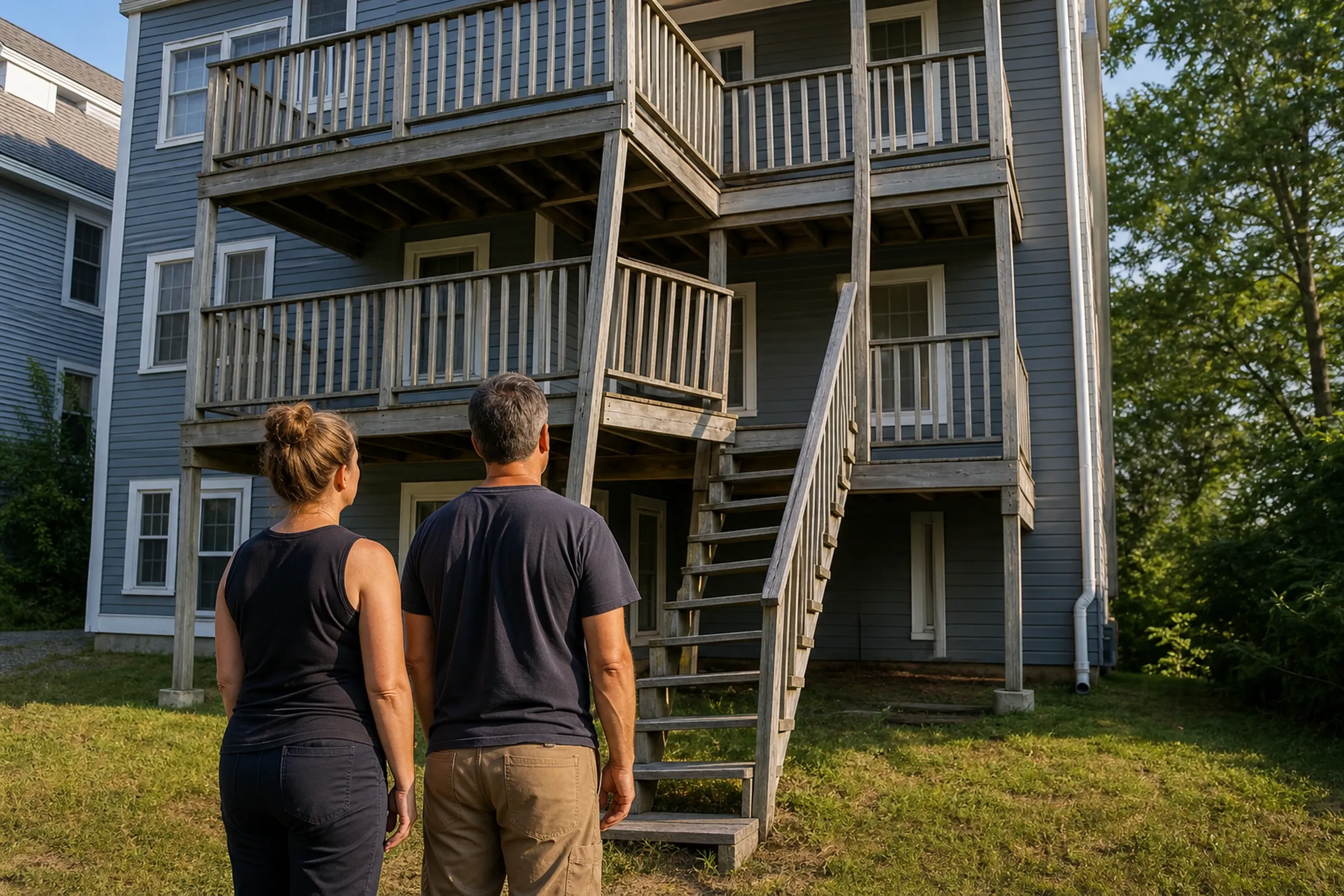
A look underneath before any number.
We get under the old deck with a flashlight and a screwdriver, probe the posts, joists and rim for soft wood, and study where the ledger meets the house.
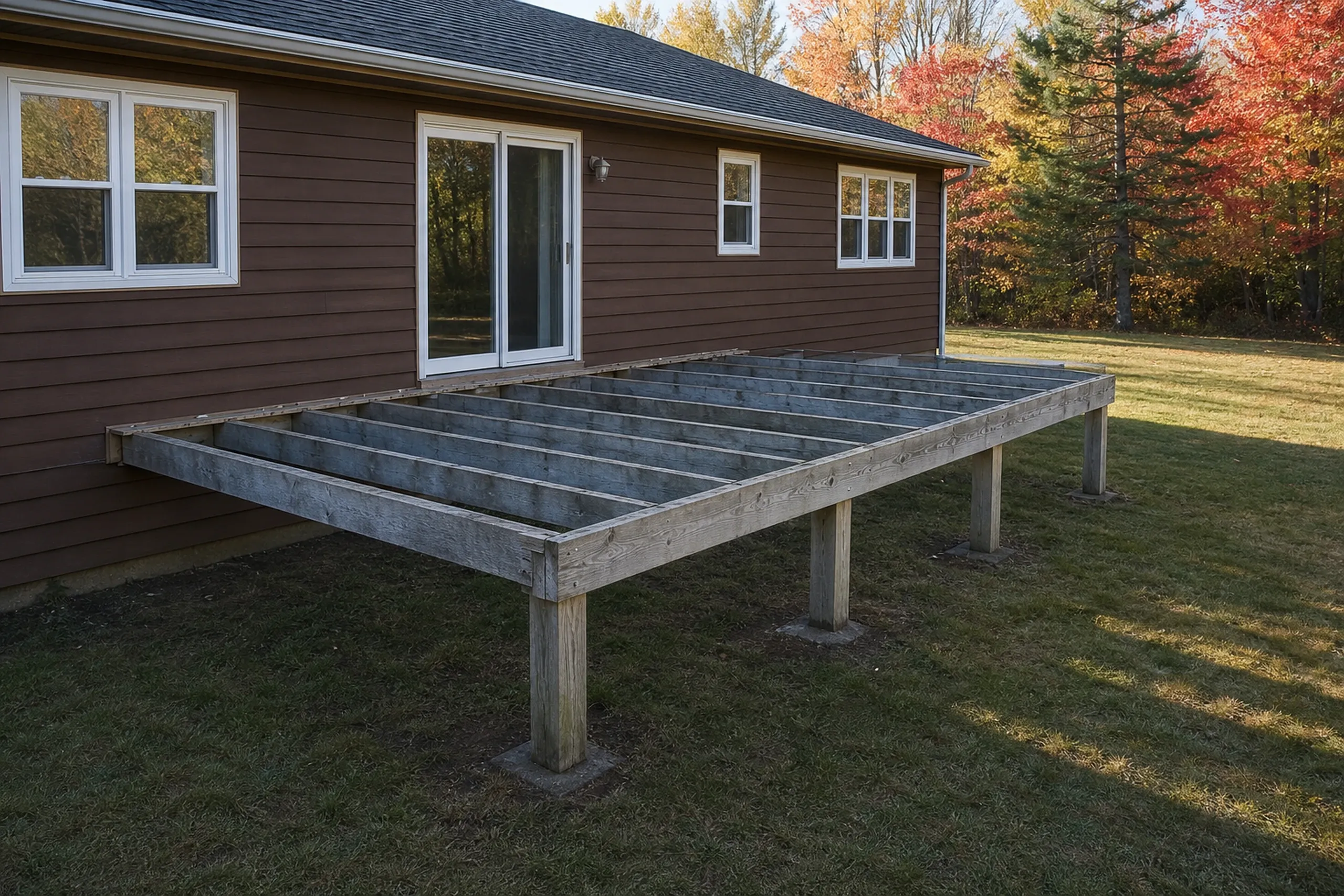
The scope and the price, written and signed.
The written price says what comes out, what goes in, and how any rot found in the house wall gets handled; Maine's contract statute requires a signed written contract once a job tops $3,000 and limits the deposit to one third.
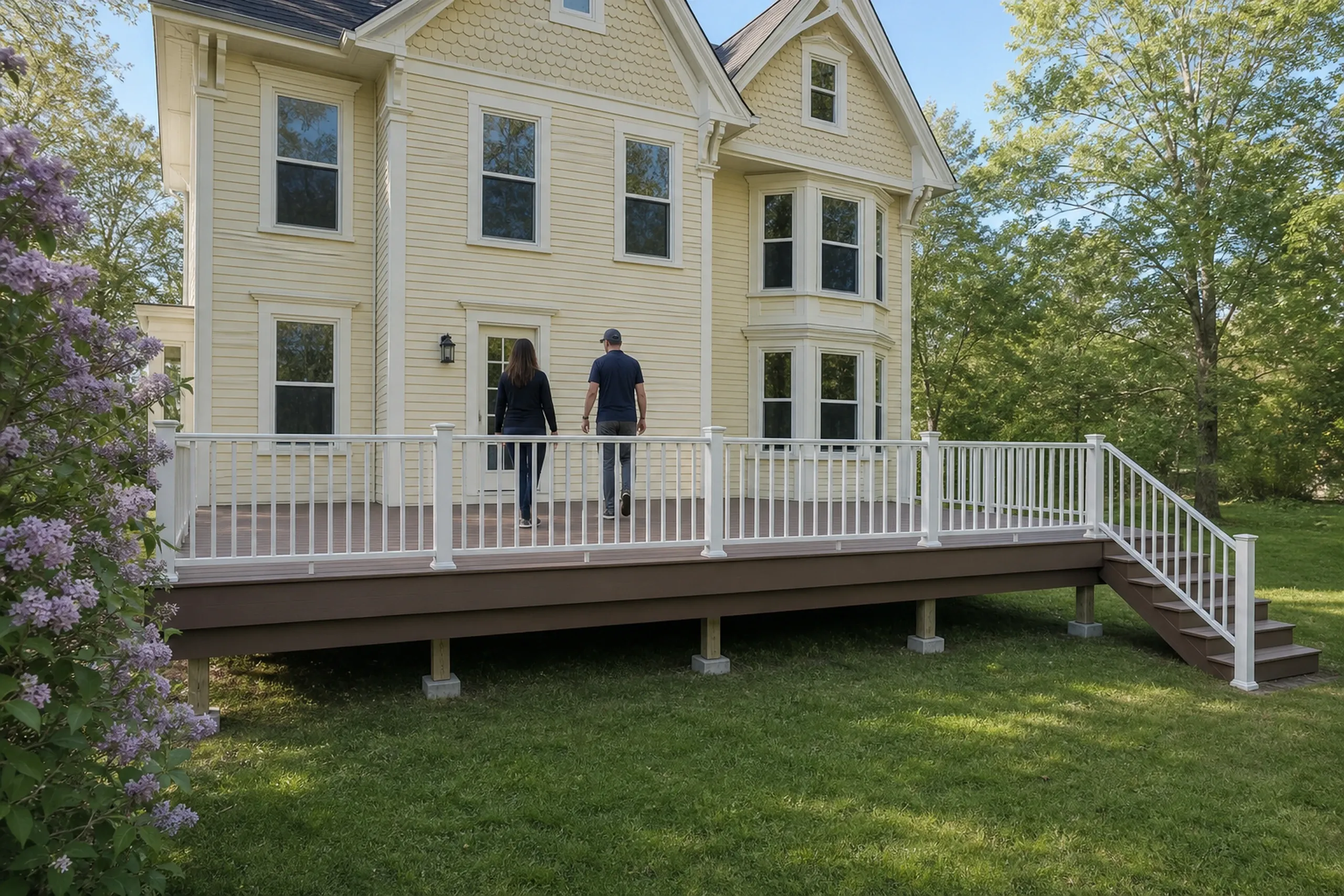
Down, back up, then a walk across it.
We tear out and haul away the old deck, set the footings and frame for the town's inspection where one is required, then lay the boards, build the rail and stairs, and finish with a walk across the new deck together.
Should You Choose Deck Replacement Over Repair?
Deck replacement is the better choice over repair once fixing the deck means fixing the frame: soft joists, a rotted rim, a nailed or unflashed ledger, or posts on blocks. At that point a patch spends money on a structure that keeps failing around the new parts.
Repair is the right call when the frame is sound and only a few boards, a stair or a rail post has failed, and our deck repair page covers that work. That deck does not need tearing down, and we will not talk you into it.
The hard case is a frame that looks fine but cannot be confirmed from underneath. Maine's adopted code says a deck whose connection to the house cannot be verified at inspection must stand on its own, which can turn a planned resurfacing into a freestanding rebuild, so we price that possibility up front.
Who Needs a New Deck, Where and When?
Who usually needs a deck replacement?
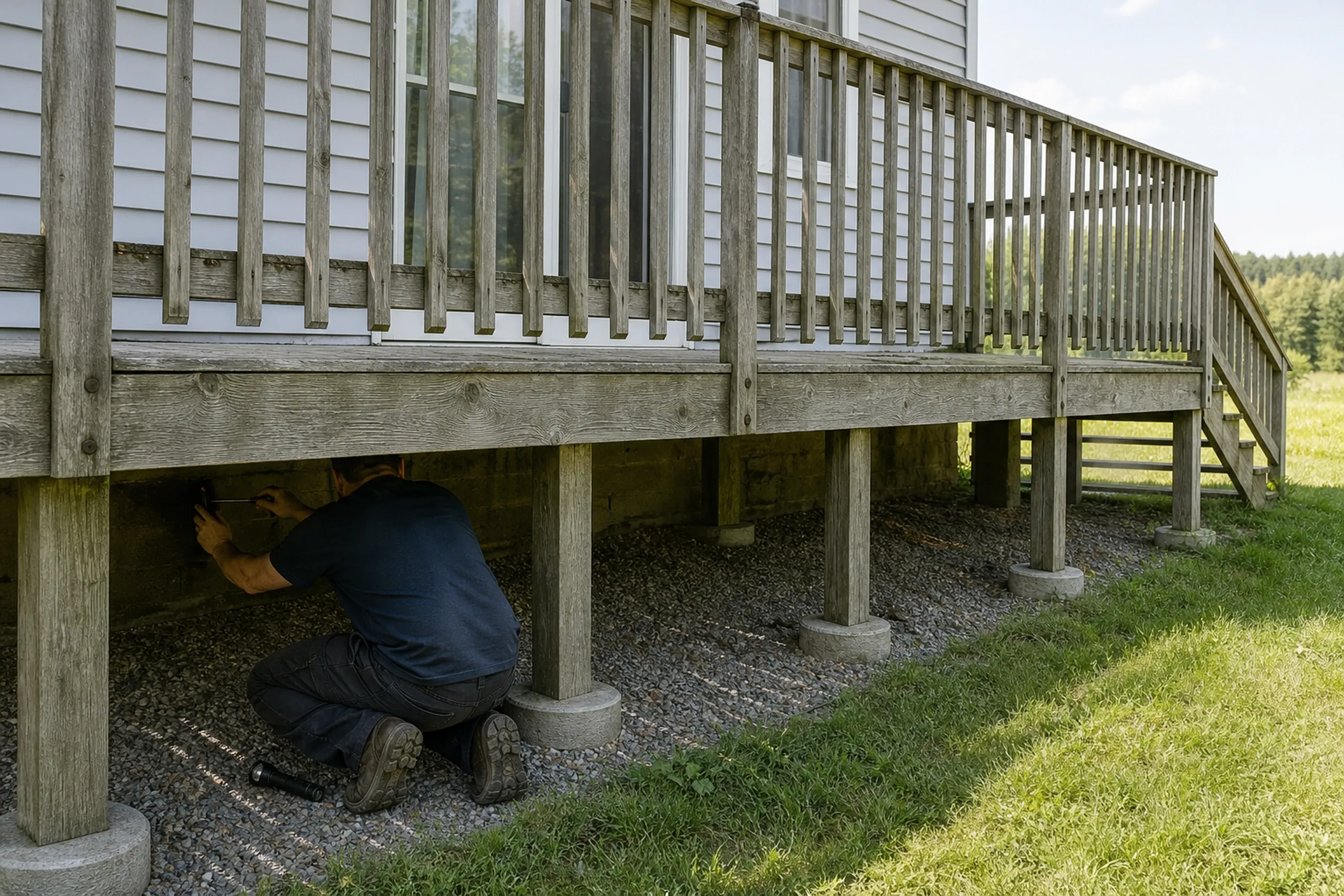
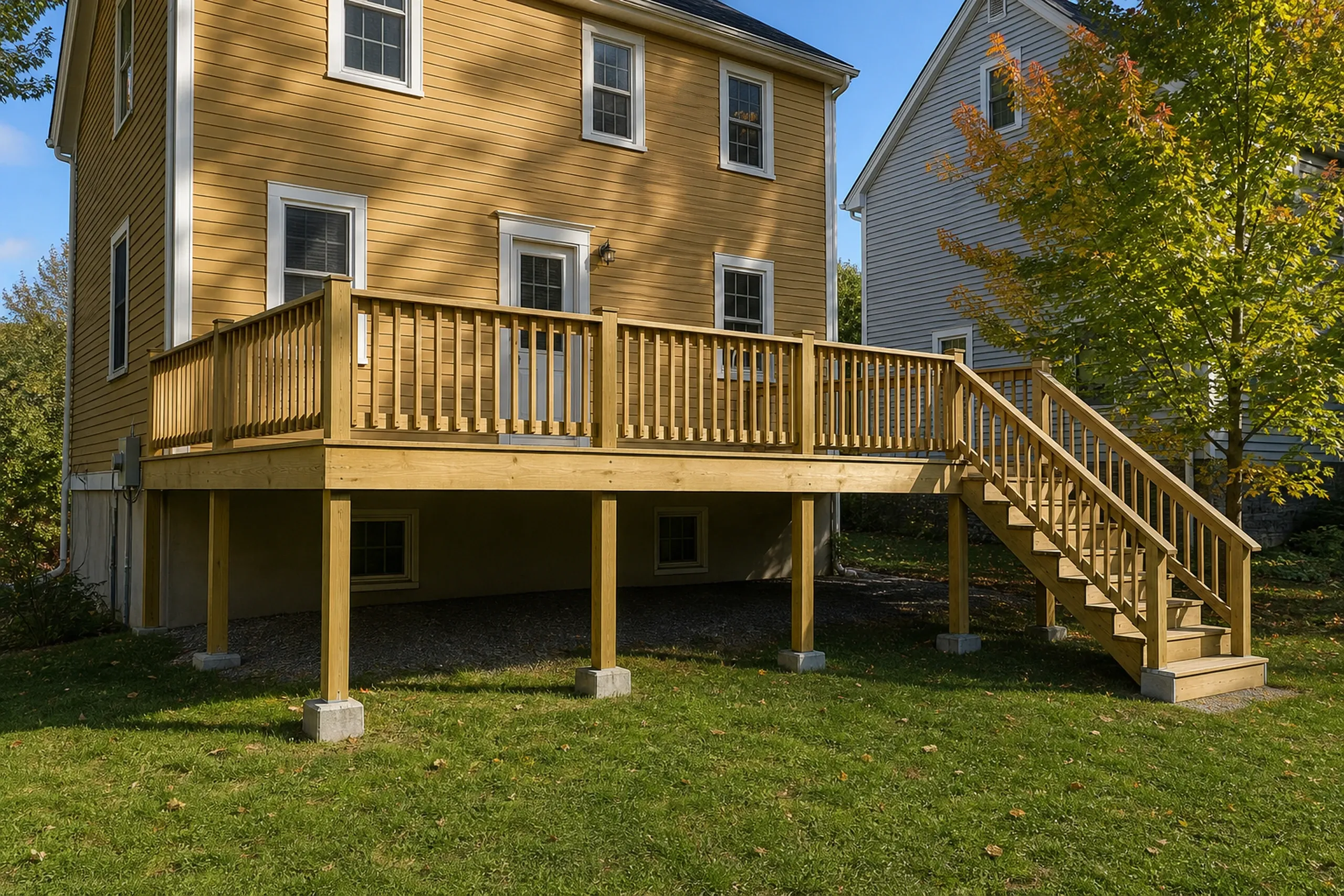
The homeowners who usually need a deck replacement own a treated deck from the 1990s that has gone soft, a deck patched board by board, or stairs pulling away from the house. Owners of two- and three-family houses with stacked back decks face it too, since those stairs are the tenants' way out.
Where can a replacement deck attach to the house?
A replacement deck can attach wherever a ledger bolts to a sound band joist and gets flashed, but the American Wood Council's DCA 6 deck guide rules out a ledger on brick veneer, a cantilevered floor or a bay window. Against those walls, the new deck gets a beam and footings of its own and never touches the house.
When is the best season for a deck replacement?
Spring through fall is the season for a deck replacement, with the new footings set before the ground freezes. A winter or early-spring visit leaves room for the permit before the season opens.
How Much Does Deck Replacement Cost?
Deck replacement costs what a new deck of that size and material costs, plus the tear-out and haul-away of the old one, which we price once we have seen it. The averages below come from many quotes: they place your budget, never price your deck.
| Deck | Average |
|---|---|
| Pressure-treated, simple layoutone level, a few steps, treated boards and rail | about $80 per sq ft, nothing new under $10,000 |
| Bigger or more complex layoutlevels, angles, wraparounds, tie-ins, more stairs | $100 to $120 per sq ft |
| Composite or PVCcomposite or PVC boards with composite rail | from $15,000 |
Installed averages for a new deck across many quotes in this area, before the tear-out and never a quote; height, the stair count and rot found at tear-out can shift it, and small decks run higher per foot.
Why can a small replacement cost more per foot?
A small replacement costs more per foot because new footings, a new ledger and new stairs cost about the same on a small deck as on a larger one. Growing a 10x10 plan into a 12x16 tends to add about $1,000.
What moves a replacement price inside the range?
A replacement price shifts most with a ramp, then with the number of stairs, then with whether any old footings are sound enough to reuse. Layout shapes and tie-ins come next and height last, about a crew day of staging once the deck sits past roughly 2 feet off the ground.
What if the tear-out finds rot in the house?
If the tear-out finds rot in the house's band joist, we stop, show you, and write the fix as a change order you sign before we go on. Maine's Attorney General says any price change on a home construction contract belongs in a written change order signed by both parties.
What Is the First Step Toward a New Deck?
The first step toward a new deck is a free estimate request: we come out, get under the old deck, and put the tear-out, the new frame and the price in writing. Decks are all we do.