
Professional Composite Decks | Deck Builders Lewiston
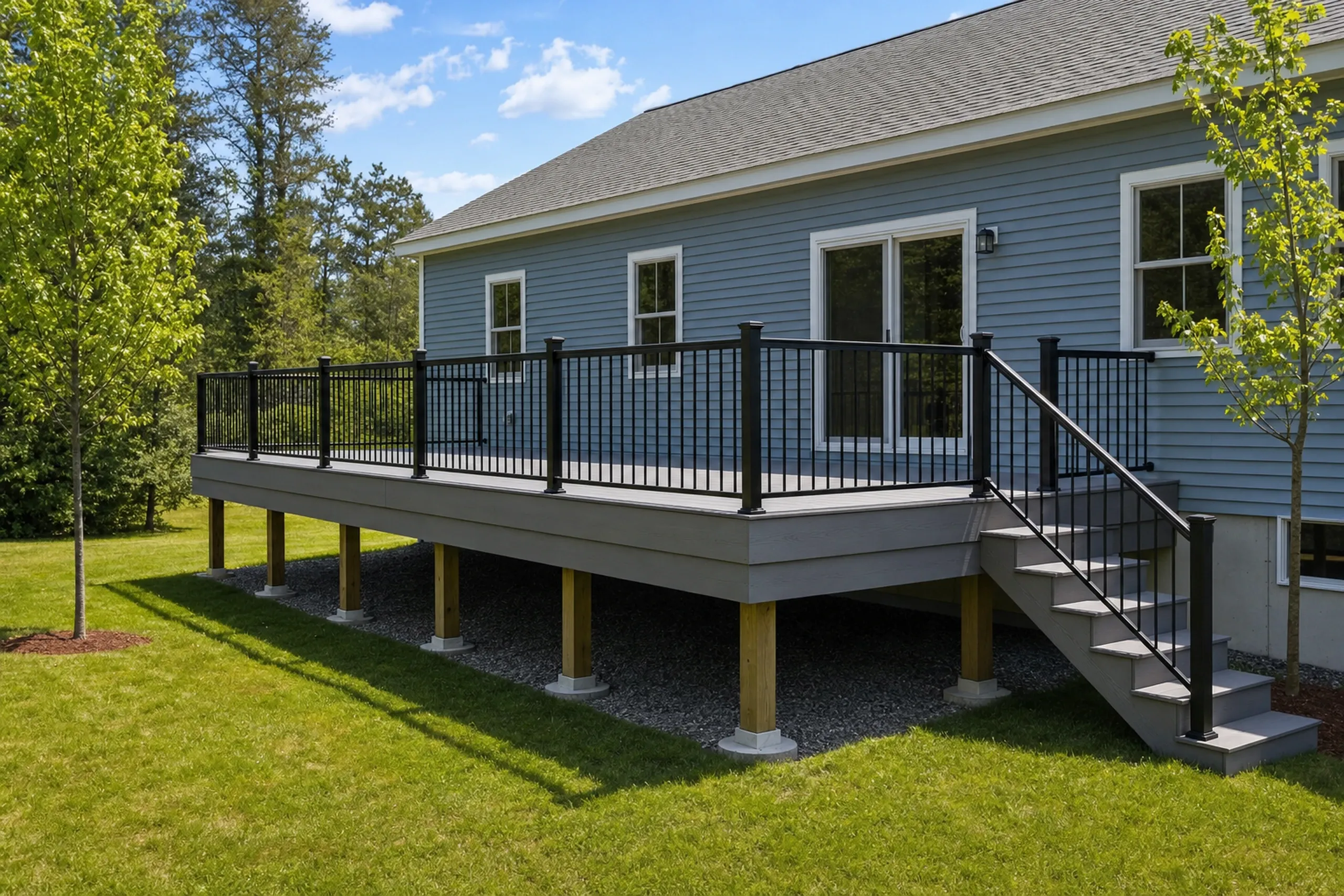
Composite decks take the stain brush out of your summers, and we build every one in the Lewiston-Auburn area on a new frame spaced and taped for the board on top. The frame, the boards and the price are on paper before the first footing goes in.
- (207) 386-9863
- 217 Main St, 3rd Floor, Lewiston
- [email protected]
- Decks only, start to finish
- Free estimate requests
- 22 towns around Lewiston-Auburn
- A new frame under every composite deck
- Joists at 12 inches under PVC boards
- Every cut end trimmed over
This page covers composite decks for homes in the Lewiston-Auburn area, from the board itself (composite, capped composite or PVC) to the frame, fasteners and trim that Deck Builders Lewiston builds under and around it.
It is written for homeowners who are finished with staining, or who are replacing a wood deck that went soft. What sets the work apart is the frame: always a new one, with joists at 12 inches under PVC as our own practice and tape on every joist.
The figure to remember is the floor. A full build in composite or PVC boards with composite rail averages from $15,000 across many quotes. Larger or more complex layouts average $100 to $120 per square foot.
Why Do Composite Boards Start With the Frame?
Composite boards start with the frame because the treated joists under a composite surface have to last as long as the boards do. A frame that sags, rots or bounces takes the new surface with it, so the frame comes first and the board second.
- Helical piles (steel posts with screw plates, turned into the soil) set 4 feet down on most jobs, or a concrete pier where one is called for
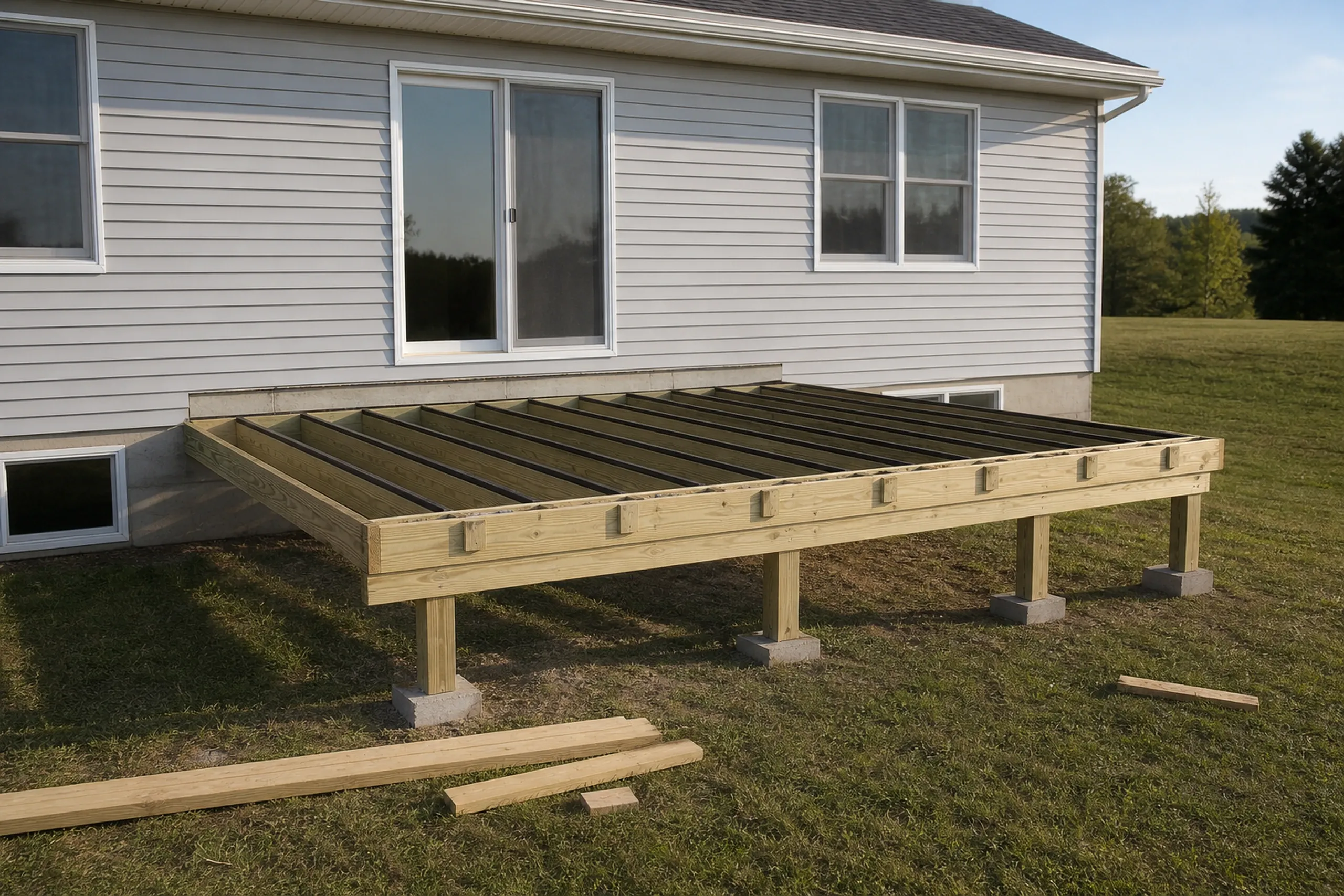
- Joists at 16 inches on center for composite boards, tightened to 12 under PVC, each taped across the top
- A ledger (the timber that ties the deck to your house wall) flashed against water, or a freestanding deck where the wall cannot carry one
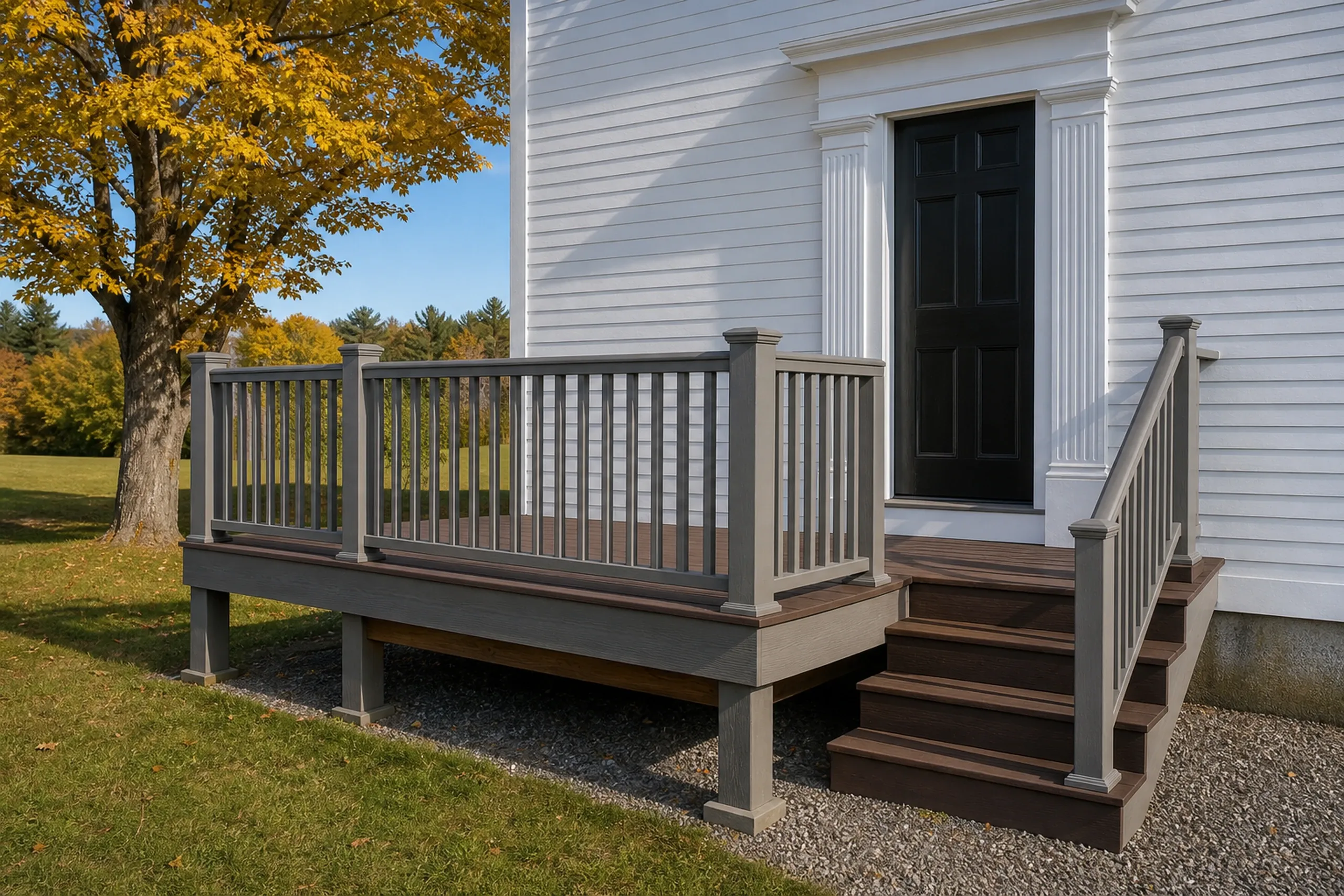
What other deck work pairs with composite?
 Pressure-Treated DecksThe most affordable deck, framed and decked in treated lumber.See Pressure-Treated Decks
 Deck RailingsAluminum, cable or composite rail, at the height and spacing the code asks for.See Deck Railings
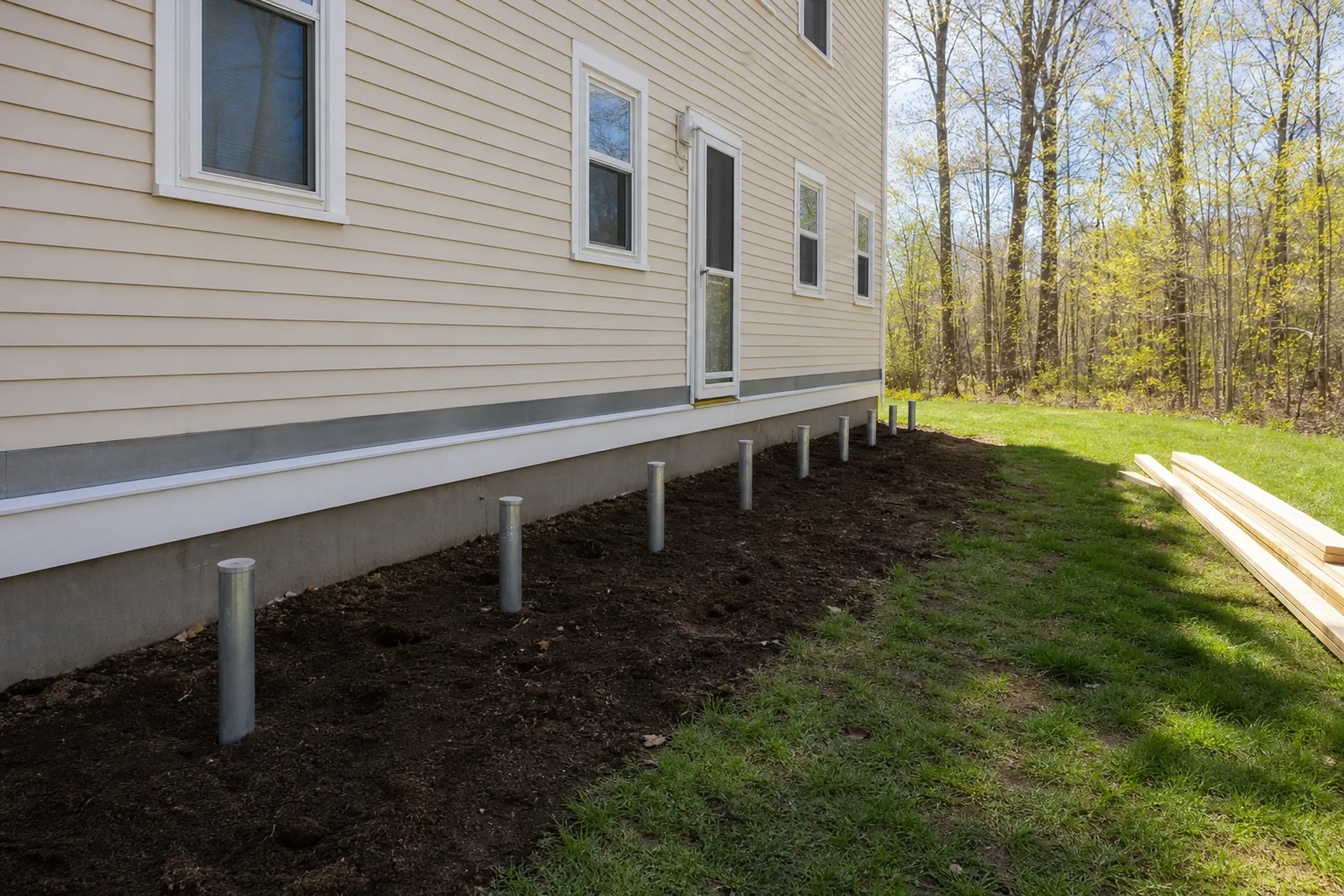 Deck ReplacementThe old deck torn out, new footings and a new frame, never new boards on a tired frame.See Deck Replacement
Where do we build composite decks?
What Goes Into a Composite Deck That Lasts?
A composite deck that lasts depends on three decisions: the board, the frame under it, and the way the crew lays the boards over that frame.
Composite, Capped Composite or PVC Boards?
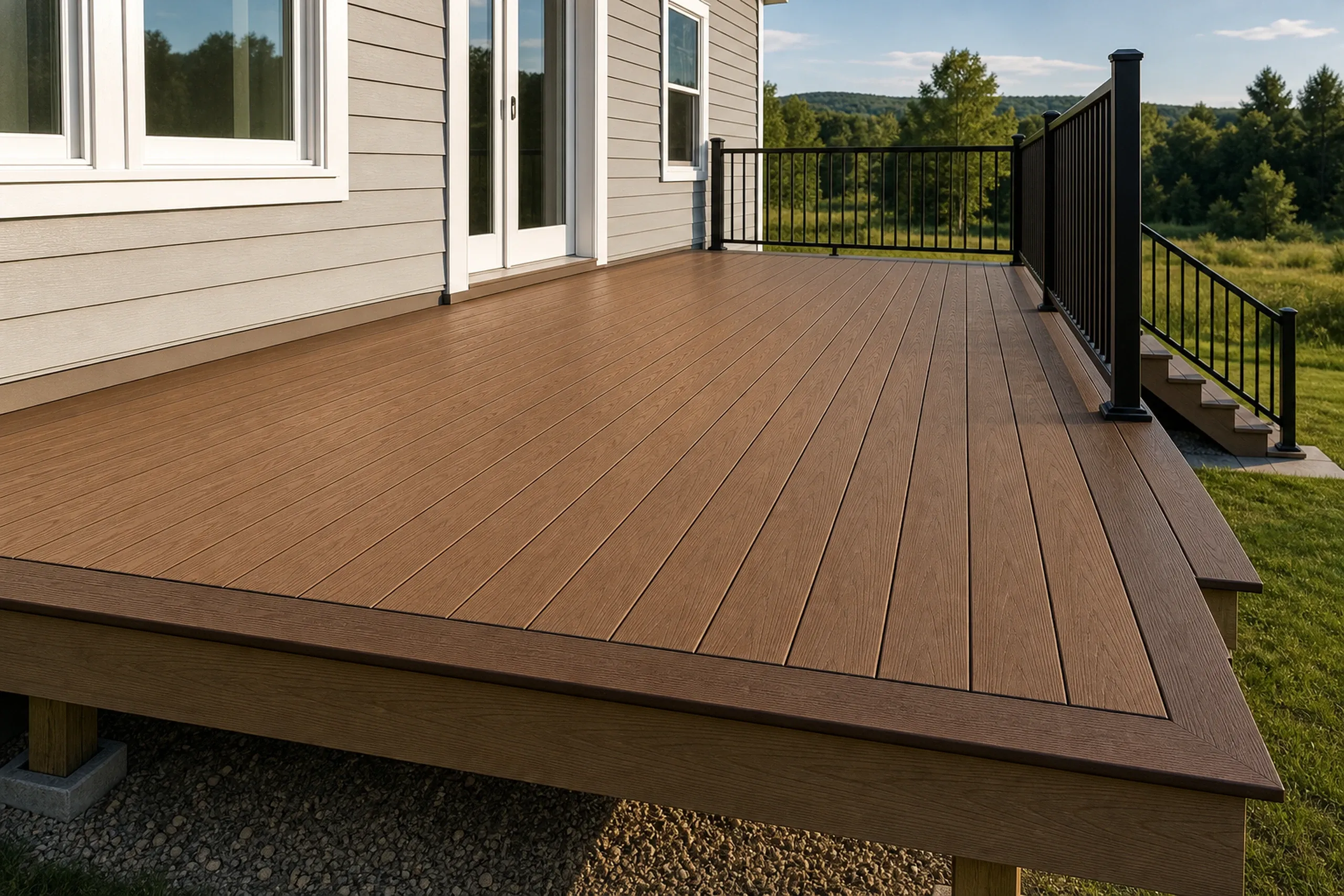
TimberTech describes composite as "a blend of polymers and organic wood fibers" and caps its composite core on three or four sides, calling the four-sided cap the most protective against moisture. PVC goes further: by TimberTech's own comparison, it "doesn't feature any organic materials like wood pulp" and is far lighter than wood or composite.
Deckorators takes a third route with its Surestone boards, which it describes as a blend of plastic polymers and minerals with zero organic material. Our pick on most jobs is PVC from TimberTech or AZEK, with Deckorators' mineral boards a newer choice worth a look.
We install Trex when you ask for it, most often to match boards already on the house.
Framing Under Composite: 12 Inches and Joist Tape
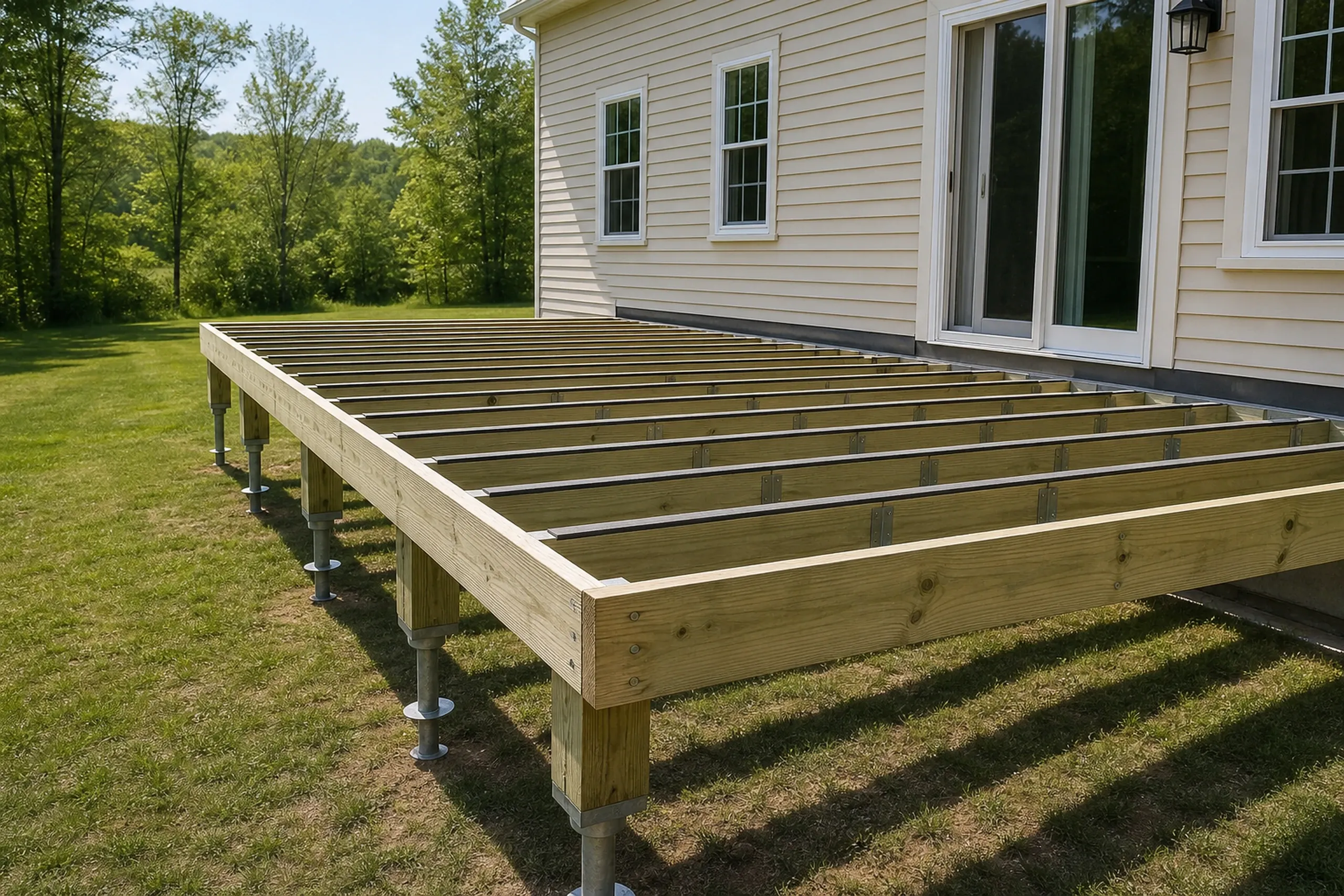
The frame has to outlive the boards. TimberTech sets 16 inches on center (middle of one joist to the middle of the next) as its residential maximum for standard boards; under PVC we close that to 12 inches as our own practice, because a stiffer frame keeps a lighter board flat and quiet underfoot.
A diagonal layout tightens to 12 inches on TimberTech's chart. Every joist then gets tape across its top, or a roll-on frame coating, to seal the screw holes where water would otherwise soak in.
Blocking (short lengths of joist set crosswise between the joists) goes in rows every 4 to 6 feet, the spacing TimberTech gives to keep joists from twisting.
Heat, Gaps, Fasteners and Trim on Composite
TimberTech says "all decking products will get hot in the sun" and that darker colors feel hotter, so on an unshaded south-facing deck we steer you toward a lighter board. Gaps move with the thermometer too: on TimberTech's spacing chart, composite end joints get 3/16 inch at 32 degrees F and below but 1/8 inch from 33 to 74 degrees.
Hidden clips hold most boards from the edge, so no screw heads show where you walk; PVC is the exception, and because it moves we screw it through the face and plug every hole. We follow each maker's gap and fastener rules to the letter, since TimberTech's PVC warranty excludes "improper gapping" and "any fasteners not supplied by Manufacturer."
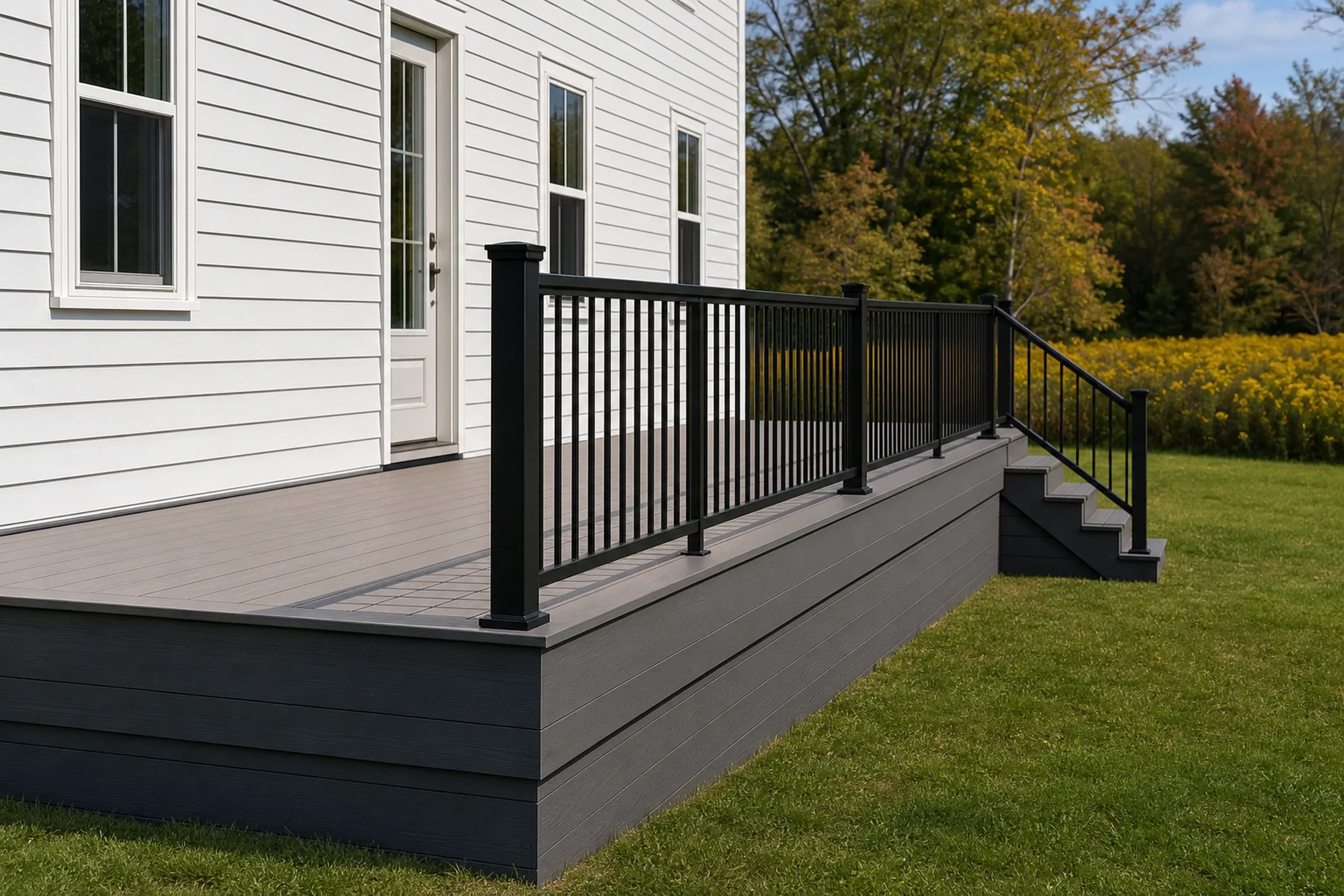
On composite, trim covers every cut end, at least along the rim joist (the outside board of the frame), so the raw core never shows from the yard. We would rather close in the space under the deck with skirting cut from the same decking than with lattice, which costs more but looks built in.
What Composite Deck Services Do We Offer?
A composite job with us covers the deck from the footings to the last stair tread.
We pull the town permit where one is needed, though approval is always the town's call. Any deck standing more than 30 inches above the ground needs a guard under Maine's version of the 2021 International Residential Code, 36 inches tall at minimum with every gap too small for a 4-inch ball, and that same code holds composite boards and rails to their own standard, ASTM D7032.
- Layout planning, footings, posts and a frame sized and spaced for the board you choose
- Joist tape and ledger flashing, then composite, capped composite or PVC boards on the maker's own fasteners
- Stairs, risers and fascia in matching material, a railing that suits the deck, then cleanup and a final look
How Does a Composite Deck Go From Plan to Boards?
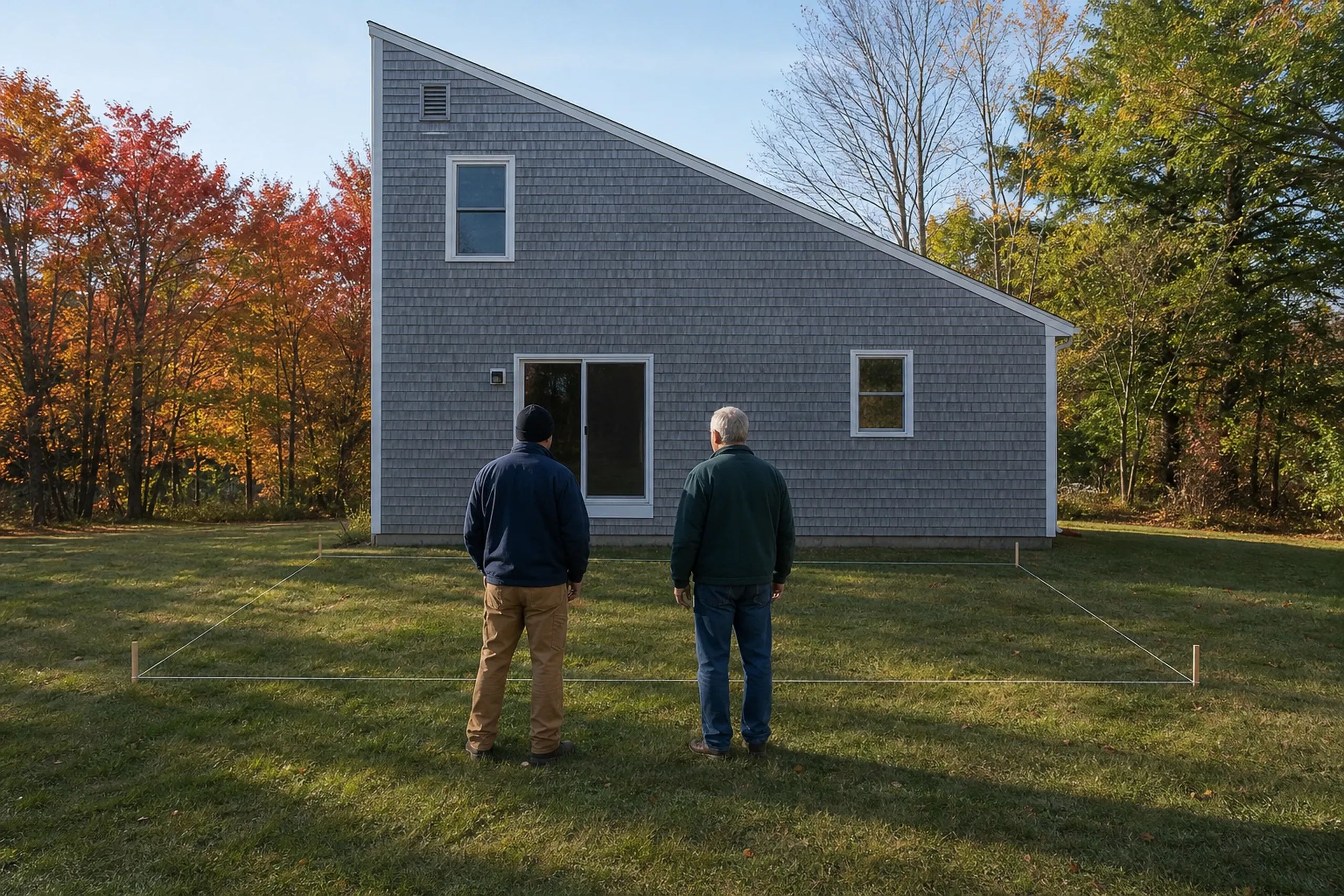
Yard, house wall and old deck first.
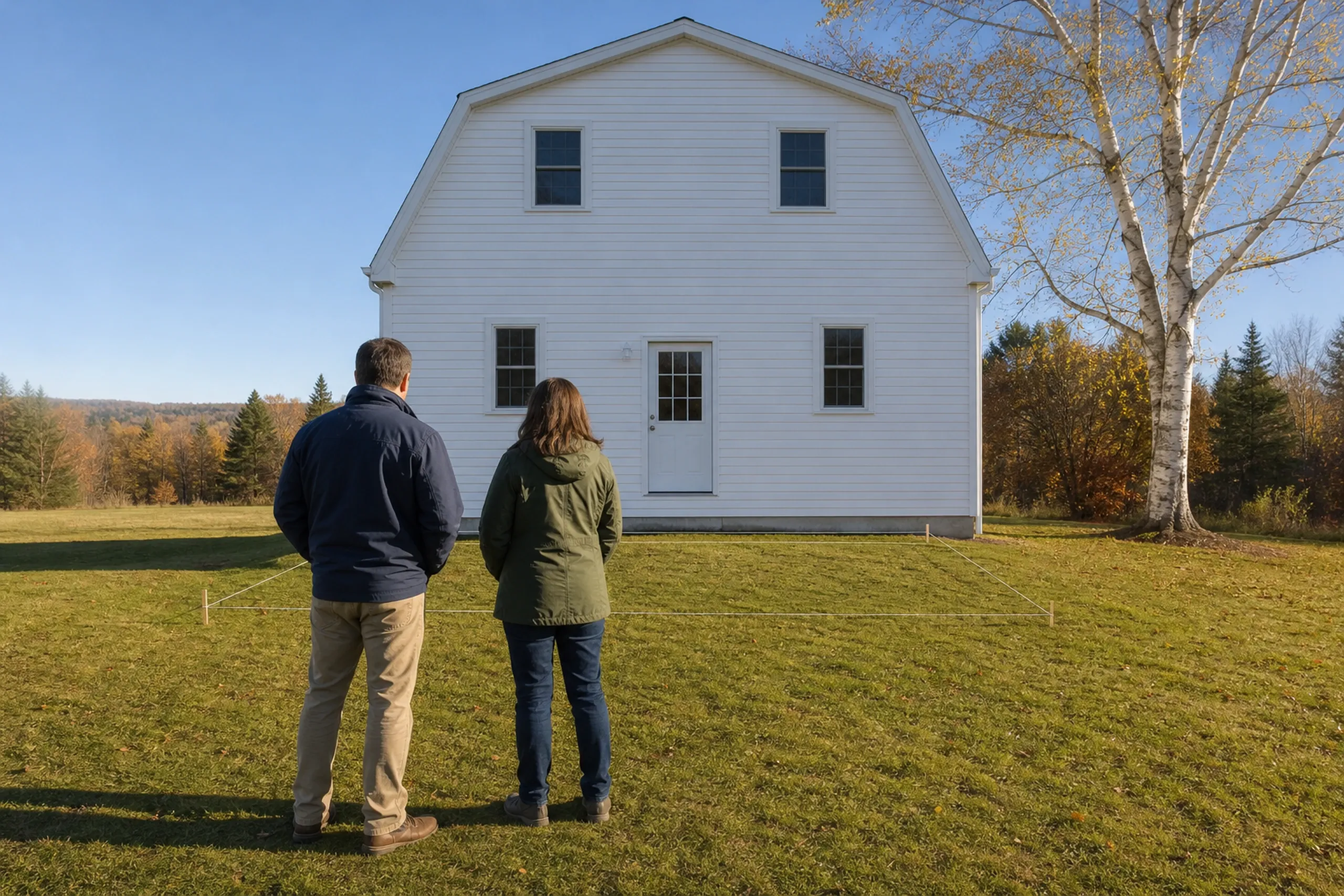
We walk the yard for slope and sun, look at the wall where a ledger would bolt on, and get under any deck already there before we talk colors.
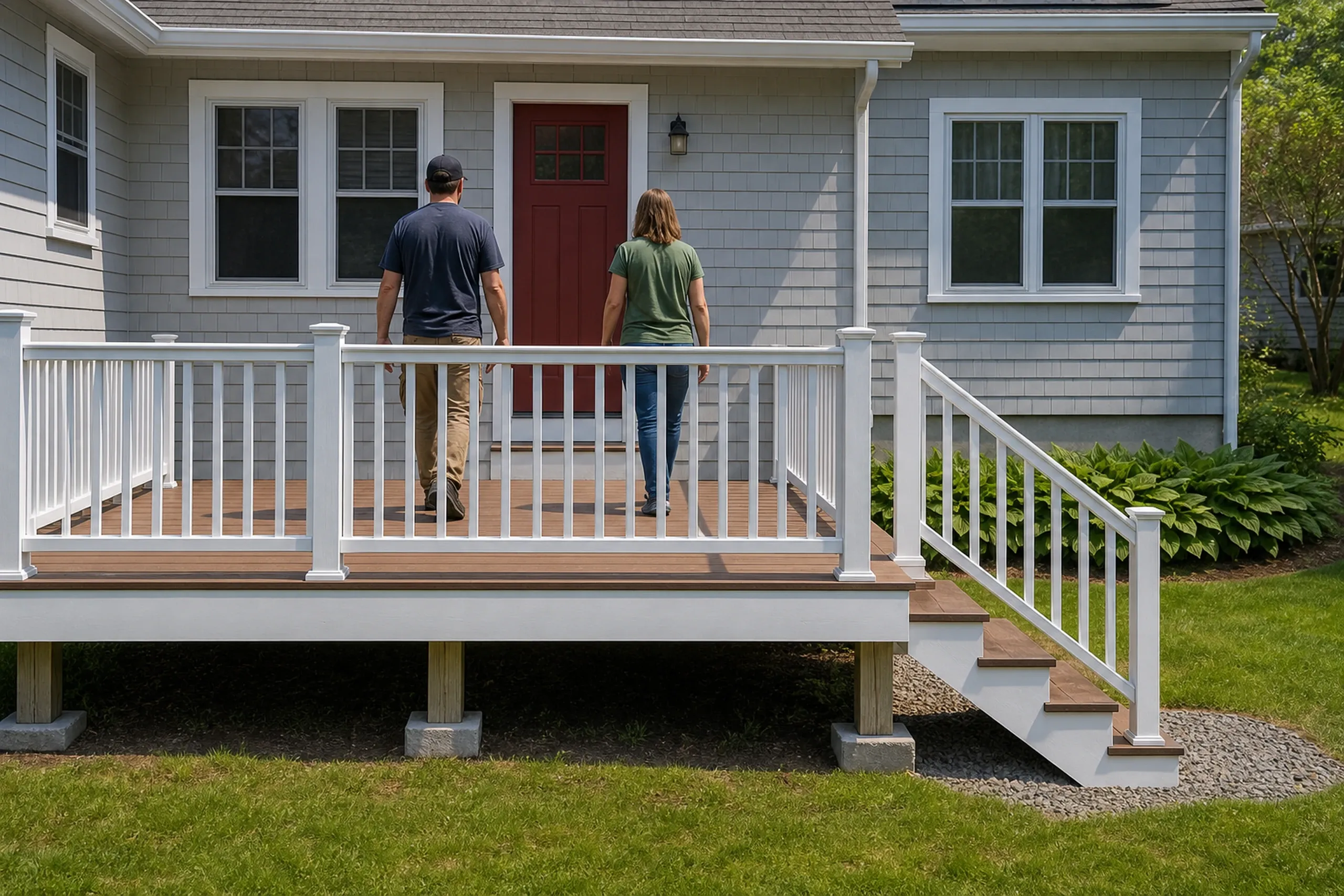
The price and the contract on paper.
You get a written price that names the frame, the board line and the railing, then a signed contract before work starts; under Maine's home construction contract law, any job over $3,000 needs one, and the deposit stops at one third.
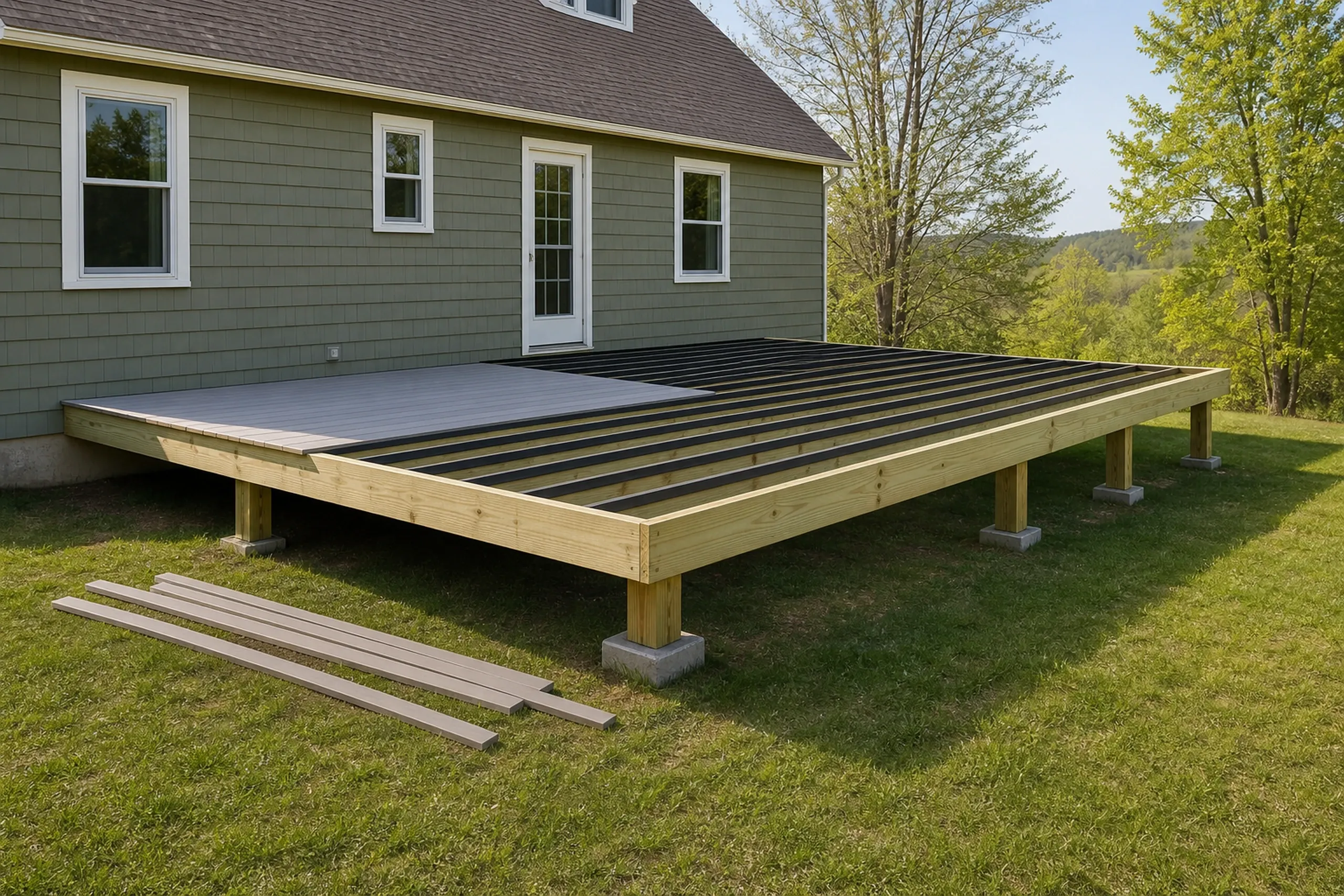
Footings and frame, then the surface.
The footings and taped joists come first and stay open for you to inspect, then boards, trim, stairs and railing. At the end we cross the new deck together, and any old deck goes away with us.
When Are Composite Decks the Right Call?
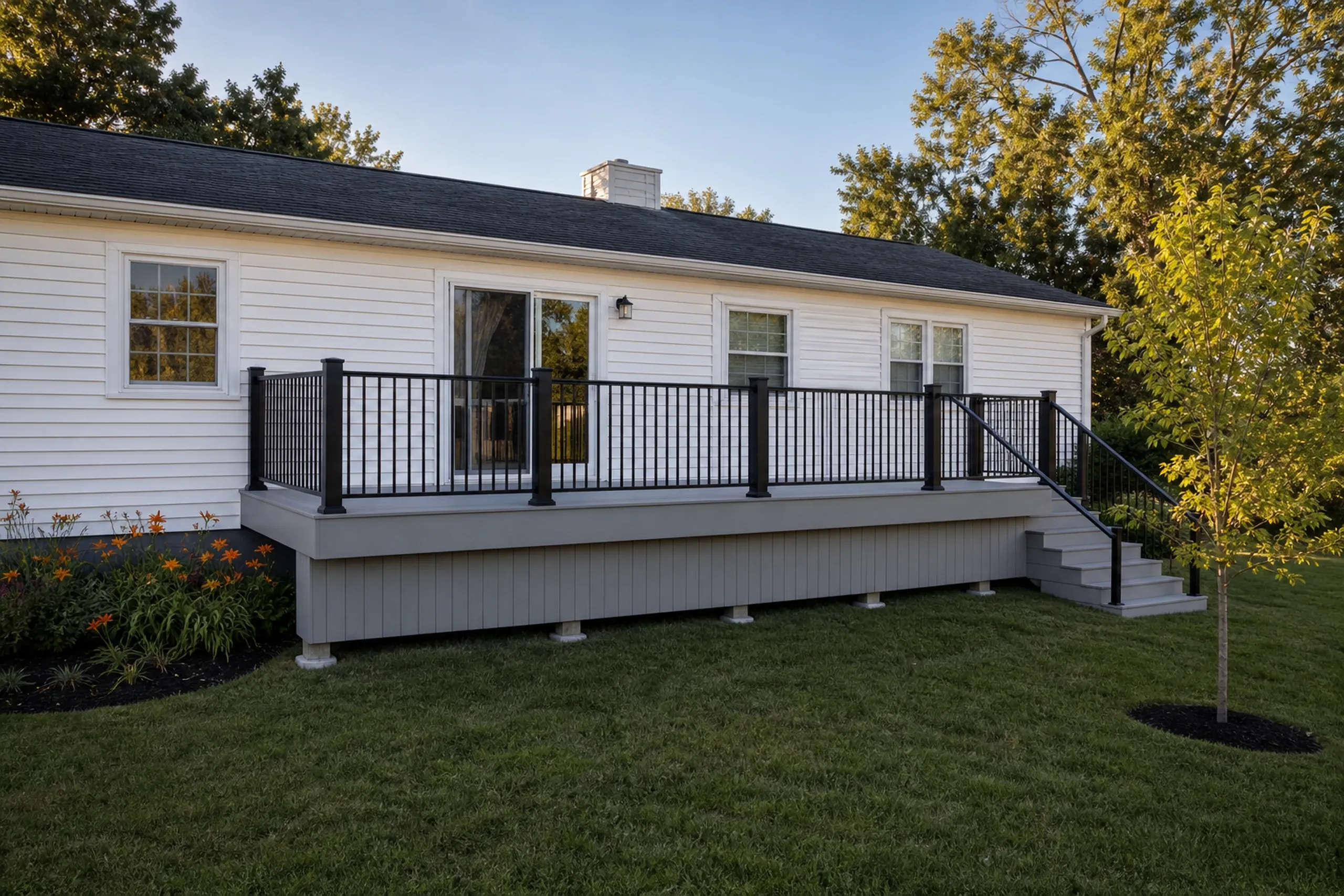
Composite decks are the right call for most homeowners in the Lewiston-Auburn area who plan to stay in the house and are done with staining. Snow sits on a deck here for months and freeze-thaw works at every board, and a capped or PVC board takes it with no sealer to put back on.
Composite is the wrong call on a frame that is already tired. Framing costs less than any other part of a deck, so saving on lumber under premium boards makes no sense, and we will not build it.
It is a harder sell on a small, low deck with a tight budget, or on a damp, shaded side of the house, where Deckorators says mold and mildew will grow on plastic as well as wood. There we put the treated-wood number beside the composite one.
Who Chooses Composite, and Where and When?
Who gets the most out of a composite deck?
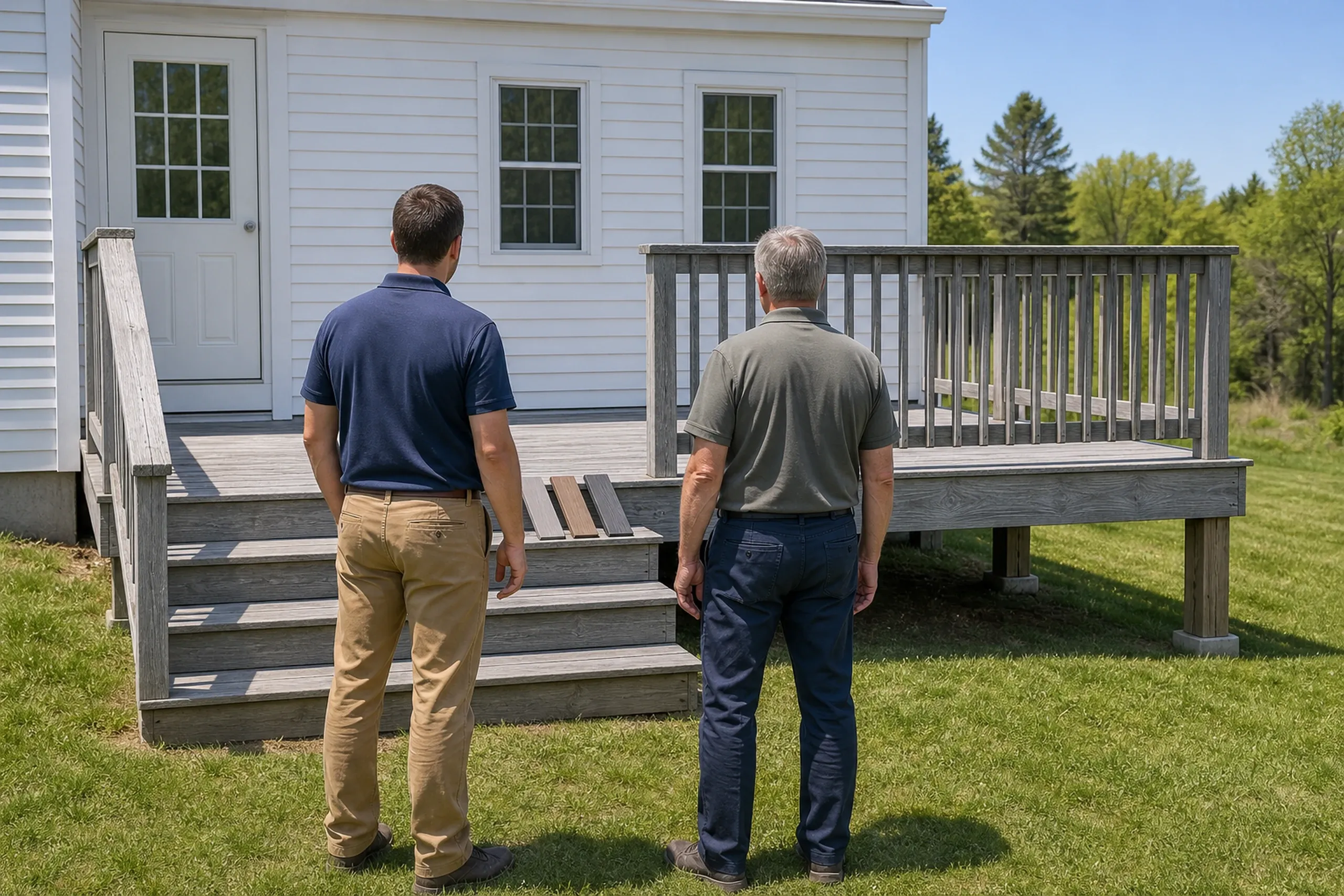
The homeowners who get the most out of a composite deck are tired of staining every few summers, or are replacing a wood deck that splintered or went soft.
Where does a composite deck attach to the house?
A composite deck attaches at a ledger bolted to the house's band joist (the rim of the house floor), with flashing lapped over it so rain never reaches the house framing. Where the wall cannot carry a ledger, such as brick veneer or a cantilevered floor, the deck stands free on a beam and posts of its own.
When can a composite deck go in?
A composite deck can go in any month the ground can be dug, though spring through fall is the main season and footings go in before the ground freezes. Composite boards laid in the cold get wider gaps on the makers' charts, so a late-October deck is gapped unlike a July one.
How Much Does a Composite Deck Cost?
A composite deck costs from $15,000 in the Lewiston-Auburn area for a full build in composite or PVC boards with composite rail, a floor seen across many local quotes, never a number for your particular yard. Bigger and more complicated layouts average $100 to $120 per square foot instead.
| Deck | Average |
|---|---|
| Composite or PVC, full buildnew footings and frame, composite or PVC boards and rail, one set of stairs | from $15,000 |
| Bigger or more complex layouttwo levels, angles, a wraparound, tie-ins, more stairs | $100 to $120 per sq ft |
| Composite on a tired old framenew boards screwed down to old joists | we do not build it |
Installed averages across many quotes in this area, never a quote for your deck; height, a ramp, the stairs and what an old deck hides can move a job, and small decks run higher per foot. Product names on this page are trademarks of their owners. We are an independent builder and are not affiliated with any decking or railing manufacturer.
Why does a small composite deck cost more per foot?
A small composite deck runs higher per foot since footings, ledger work and stairs barely change in cost with size, so they swallow more of a small total. Going one size up often adds little, so we are glad to price two sizes side by side.
What moves a composite price inside the range?
A composite price moves on five things, in this order: a ramp, the stairs and how many, whether sound footings already exist, the layout's shapes, levels and tie-ins, and the height. Once the deck rises past roughly 2 feet, staging costs about a crew day, a cost that lands harder on a small deck than a large one.
Is composite worth it over treated wood?
Composite is worth it over treated wood when you will keep the house and want the staining to stop: a full treated build averages from $10,000 here, against $15,000 for composite with composite rail. On a small, low, tight-budget deck, treated wood is the better buy, and we will tell you so.
What Happens After You Ask for a Composite Estimate?
After you ask for a composite estimate, we come out to see the yard and the house wall, look under any old deck, and write up the frame, the board and the price. The visit and the estimate cost you nothing.