
Quality Pressure Treated Decks | Deck Builders Lewiston
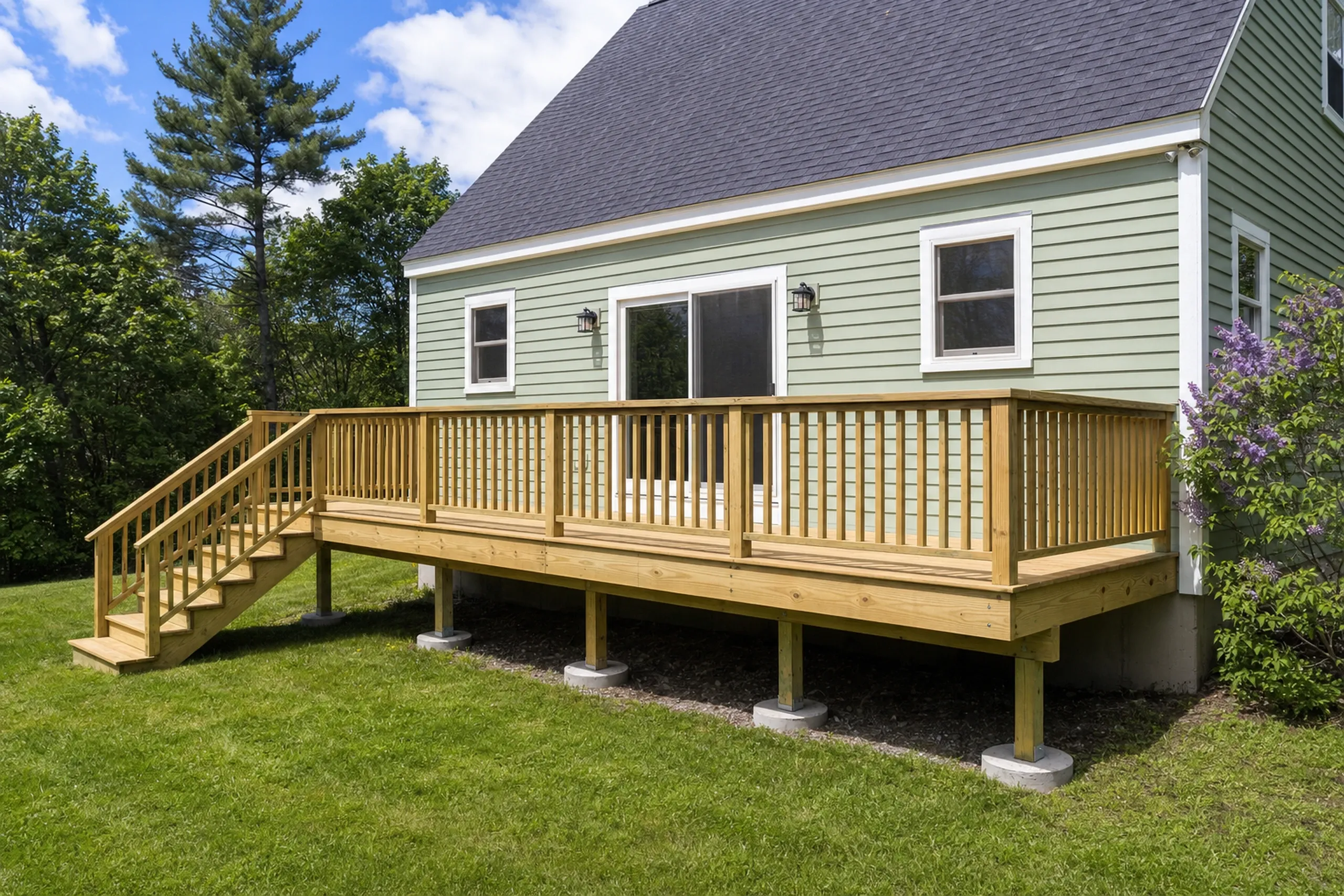
Pressure treated decks are the most affordable way to give a Lewiston-Auburn area home a solid wood deck, and ours stand on the same deep footings and heavy frame as our composite work. The boards cost less; the structure under them does not get cheaper.
- (207) 386-9863
- 217 Main St, 3rd Floor, Lewiston
- [email protected]
- Decks only, start to finish
- Free estimate requests
- 22 towns around Lewiston-Auburn
- Ground-contact posts on 4-foot footings
- Galvanized or stainless hardware
- Stain timing left in writing
This page explains pressure-treated wood decks in the Lewiston-Auburn area for homeowners who want real wood at the lowest price: what the end tag on treated lumber means, how new wood dries before its first stain, and where treated wood is a better buy than composite.
Deck Builders Lewiston builds treated decks on footings 4 feet down, with ground-contact posts, hot-dipped galvanized or stainless hardware and every saw cut brushed with preservative, so the least expensive deck still stands on a full-strength frame.
The number to keep in mind: a simple treated deck averages about $80 per square foot across many quotes, and no full treated build lands under $10,000.
Why Choose Treated Wood for a Maine Deck?
Treated wood is worth choosing for a Maine deck when price leads the decision, because it costs the least per square foot of anything we build and carries the same snow on the same frame as a composite deck. The trade-off is upkeep, and we lay that out plainly before you decide.
- Posts rated for ground contact, as the American Wood Protection Association (AWPA) chart calls for, on footings 4 feet down
- Hot-dipped galvanized or stainless nails, screws, bolts and hangers, the coatings Maine's adopted code table lists for deck fasteners and connectors
- Every saw cut brushed with a copper-based preservative, since Viance says deck stains and sealers do not protect cut ends
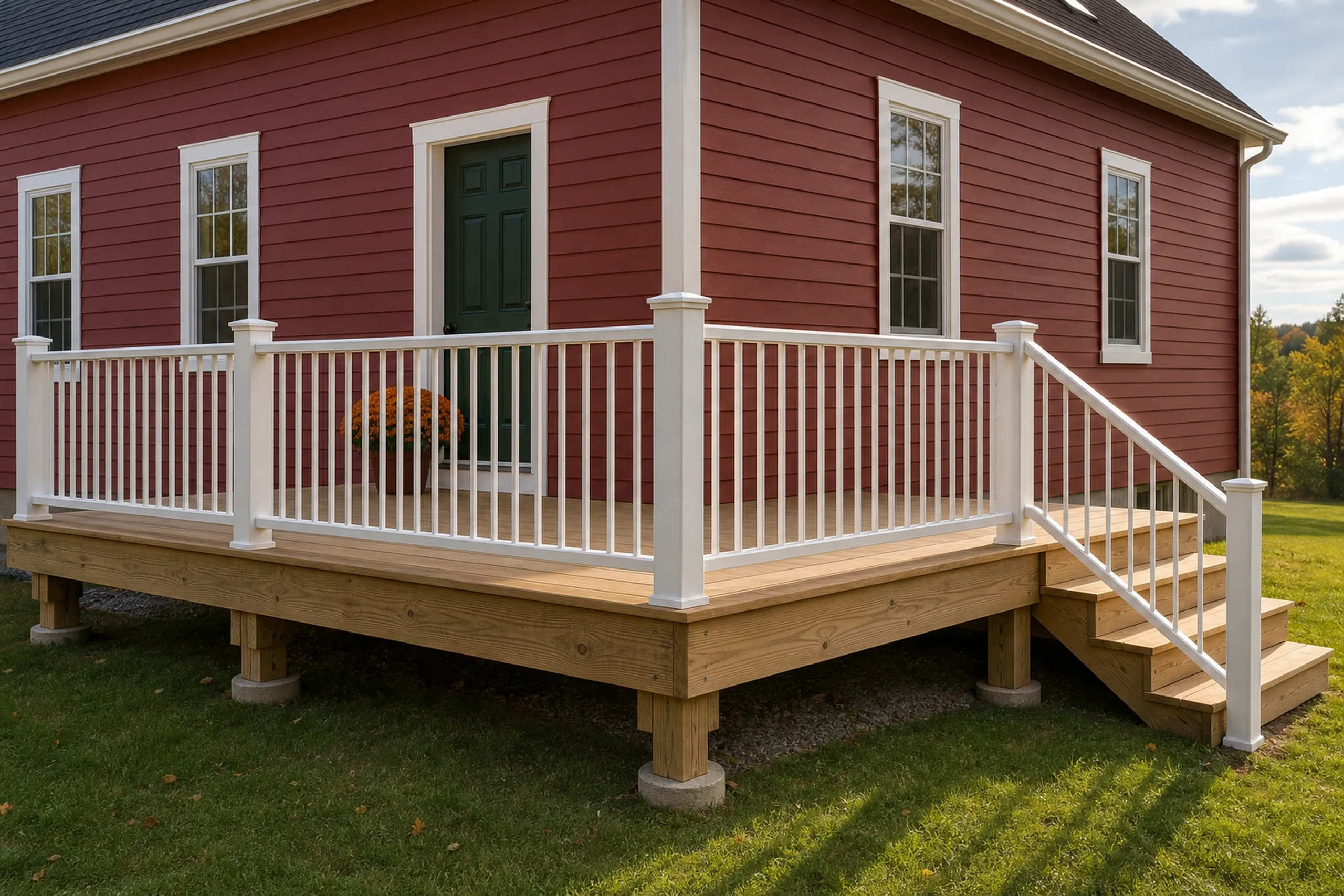
What other deck work goes with treated wood?
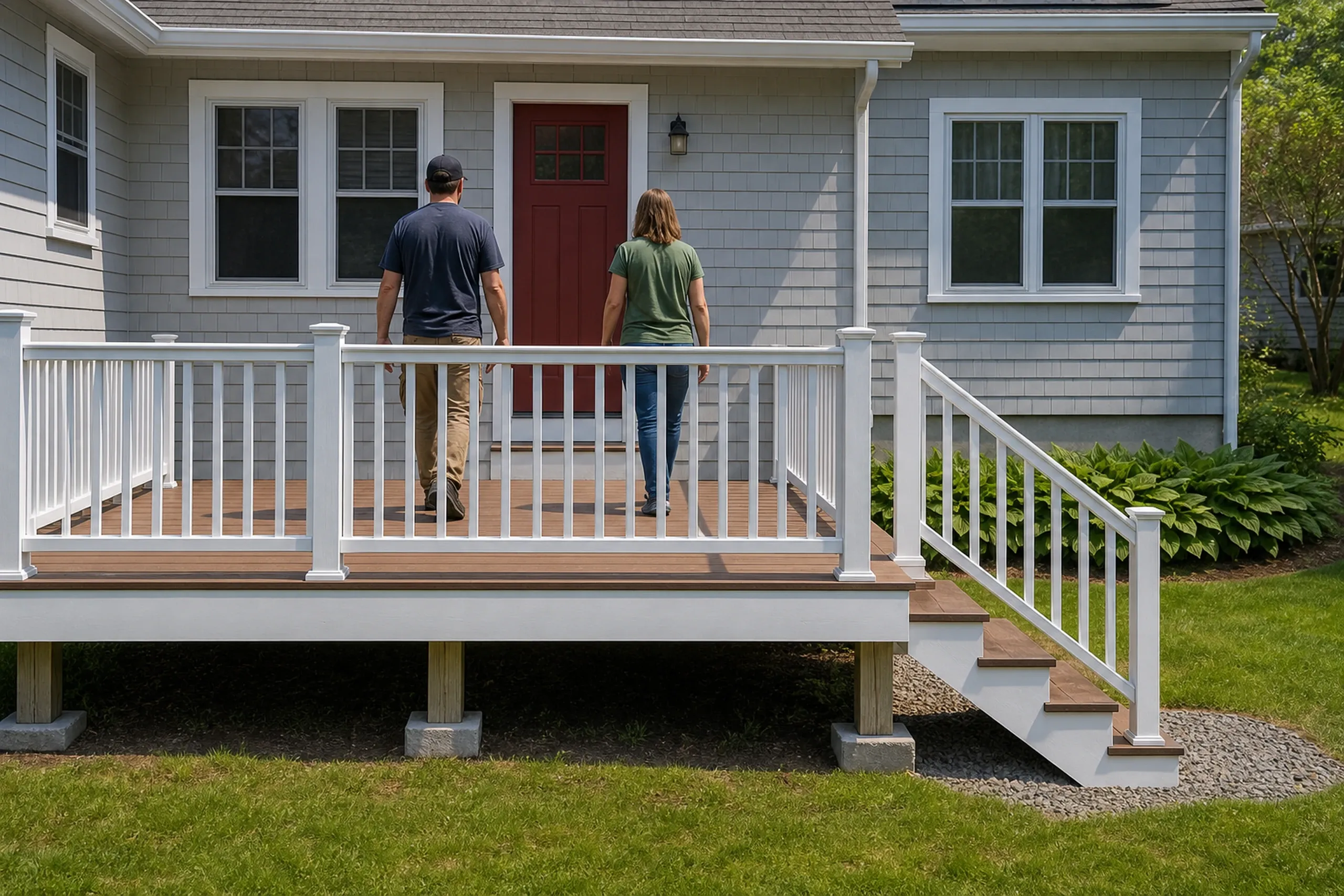 Composite DecksTimberTech, AZEK or Deckorators boards over a frame built heavier than code asks.See Composite Decks
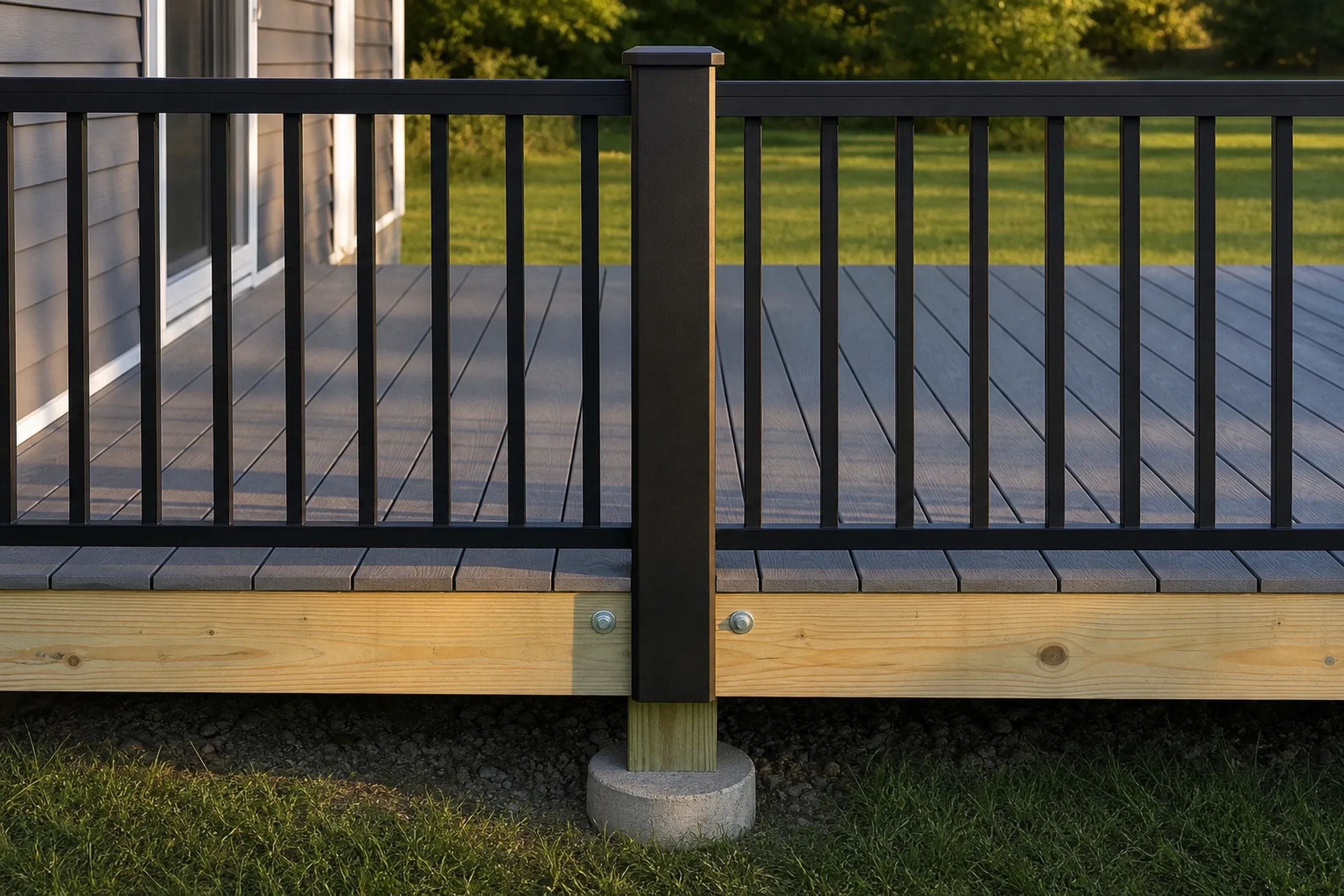 Deck RepairLoose stairs, soft boards and wobbly rails fixed when the frame underneath is sound.See Deck Repair
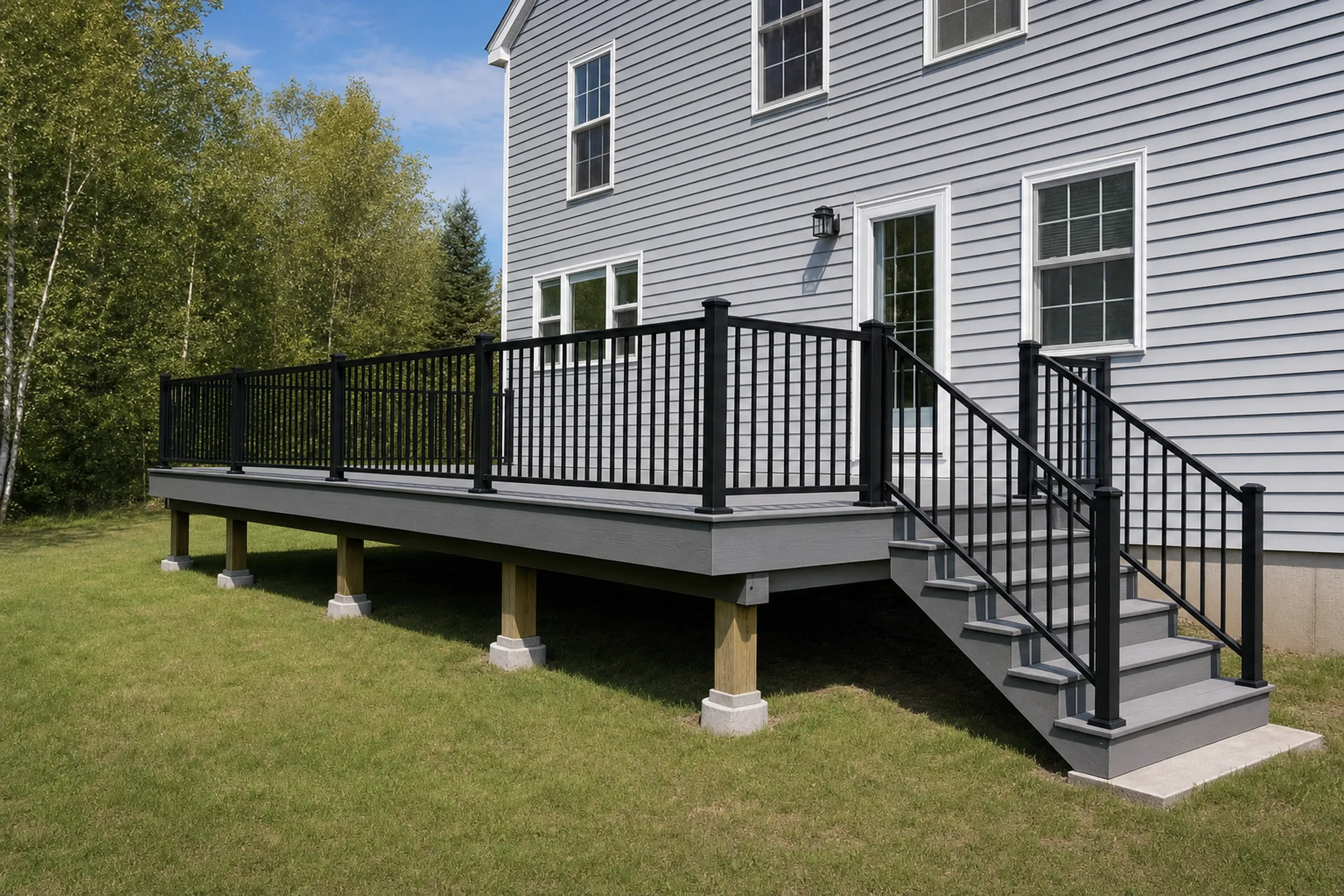 Deck RailingsAluminum, cable or composite rail, at the height and spacing the code asks for.See Deck Railings
Where do we build treated wood decks?
What Should You Know About Treated Deck Lumber?
Treated deck lumber comes down to three things worth knowing before you buy: what the tag on each board says, how the wood dries in its first season, and where it beats composite.
What the End Tag on Treated Lumber Means
Each piece of treated lumber should carry an end tag or stamp, and AWPA's homeowner guide says the Use Category printed there tells you where the wood can go. UC3B means exterior above ground, UC4A means ground contact for general use, and UC4B means ground contact, heavy duty.
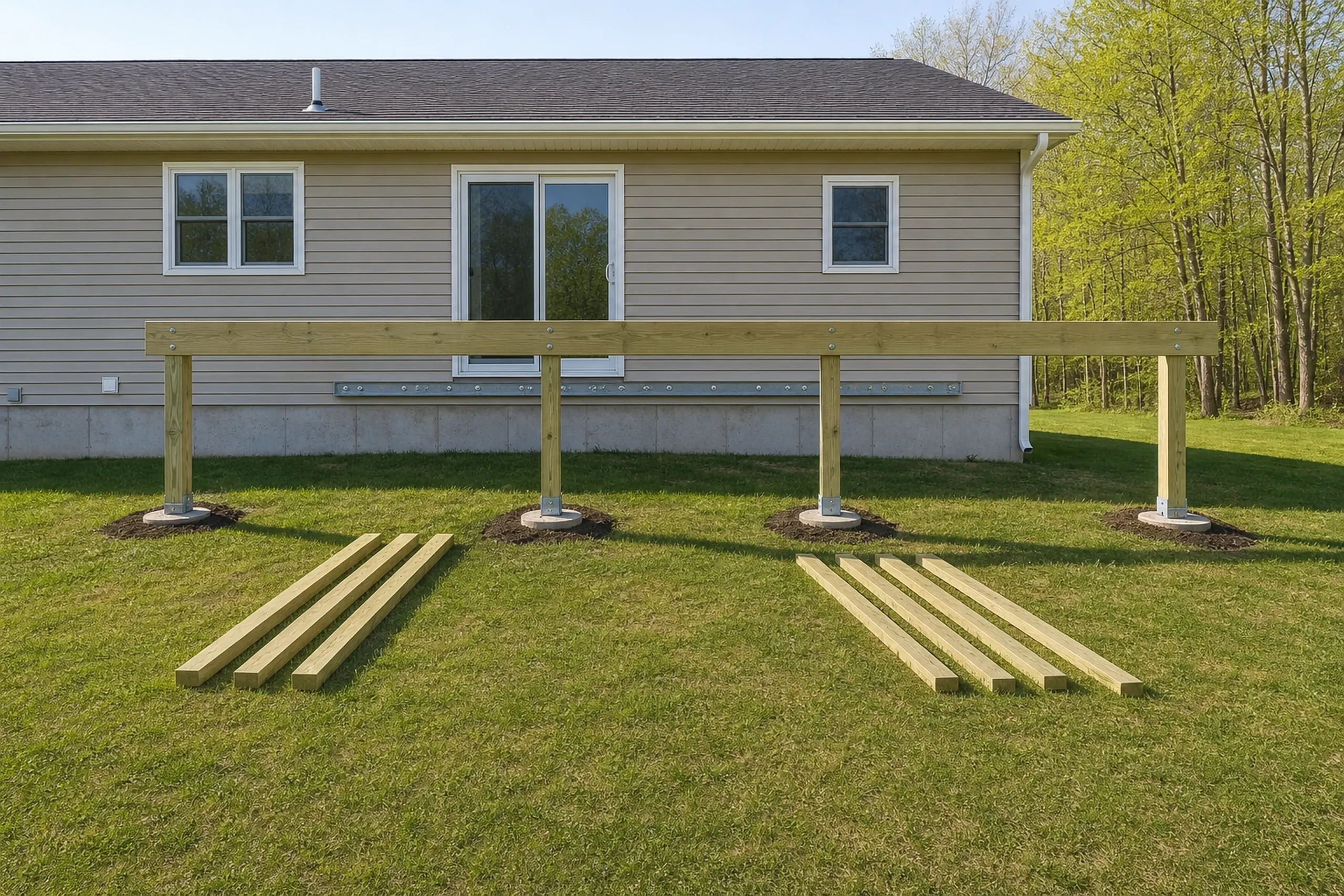
AWPA's chart puts deck boards and railing at UC3B or higher and deck posts at UC4A or higher, and it says joists and beams that are hard to replace may call for ground-contact wood too. Viance draws the line at six inches: wood that close to the soil counts as ground contact, which is where a low deck's frame often sits.
Where you want a straighter frame, we can quote ProWood TrueFrame Joist, which ProWood says is kiln-dried after treatment and "Treated to meet UC4A Ground Contact standards." ProWood also says it is planed to within 1/16 inch of its stated width, where ordinary treated lumber can vary by up to 1/2 inch.
The First Year: Drying, Then Stain
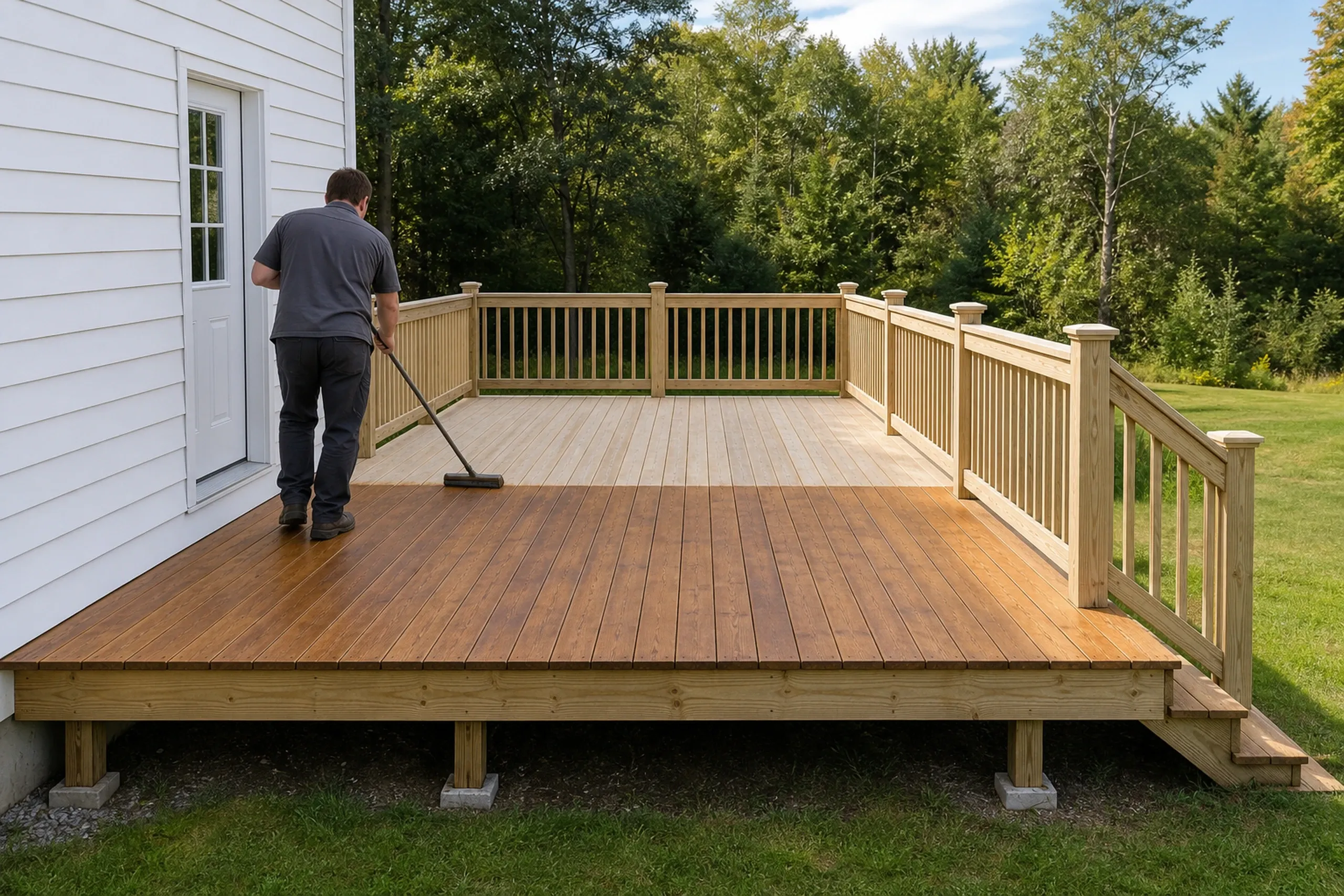
New treated lumber arrives carrying moisture from the treating process, and Viance says it typically dries enough to finish about 60 days after installation, while warning that the timing is hard to predict. We butt the boards tight as they go down, because they shrink slightly in width and thickness as they dry and open their own gaps.
To check whether the deck is ready, sprinkle a few drops of water on a board: once the wood soaks them in, it will take stain or sealer. From then on, Viance's care advice calls for a fresh water-repellent sealer coat no less often than every two years, no chlorine bleach cleaners, and only a gentle, fan-tipped power wash.
Viance also recommends a look at the deck before each winter, with room under it for air to move so the boards dry between storms. Since the first coat comes after we have gone, we leave you the stain timing in writing at the final walk.
Where Treated Wood Is the Smart Buy
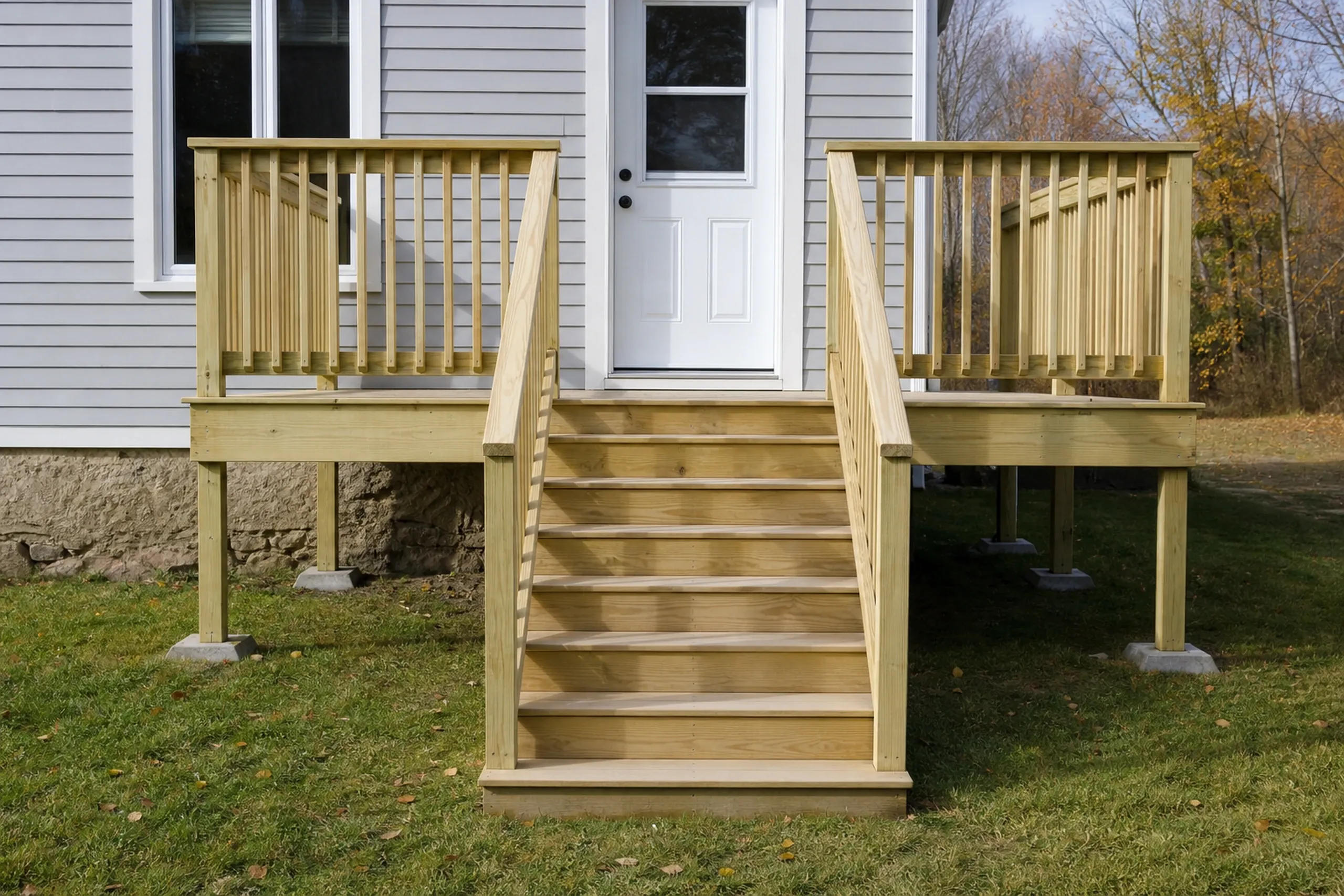
Treated wood is the smart buy on a low, simple deck off a ranch or a cape, on the long back stairs and landings of a two-family house, and on any first deck the budget has to carry today. Long stairs like those get a handrail on at least one side, which DCA 6 requires once a stair has four or more risers.
Treated lumber also holds up nearly every deck we build, composite decks included. A treated surface can be stained to match the house trim, which composite makers advise against, and a split board years later swaps out without the color-matching trouble Deckorators warns about between production runs.
What Pressure-Treated Deck Services Do We Offer?
A treated deck with us covers everything from the footings to the advice on its first coat of stain.
Maine's adopted code (R507.9.1.3) calls for hot-dipped galvanized or stainless fasteners at the ledger, and the American Wood Council's DCA 6 guide says aluminum flashing must stay off copper-treated lumber. So the flashing behind a treated ledger on our decks is never bare aluminum.
- Layout, footings and ground-contact posts, then beams, joists and blocking built heavier than the minimum
- A flashed ledger held to the house with bolts or structural screws (never nails), treated boards on galvanized or stainless fasteners, and stairs with landings
- Railing and guards, cut ends brushed with preservative, cleanup, and a final walk across the deck with you
How Do We Build a Treated Deck, Step by Step?
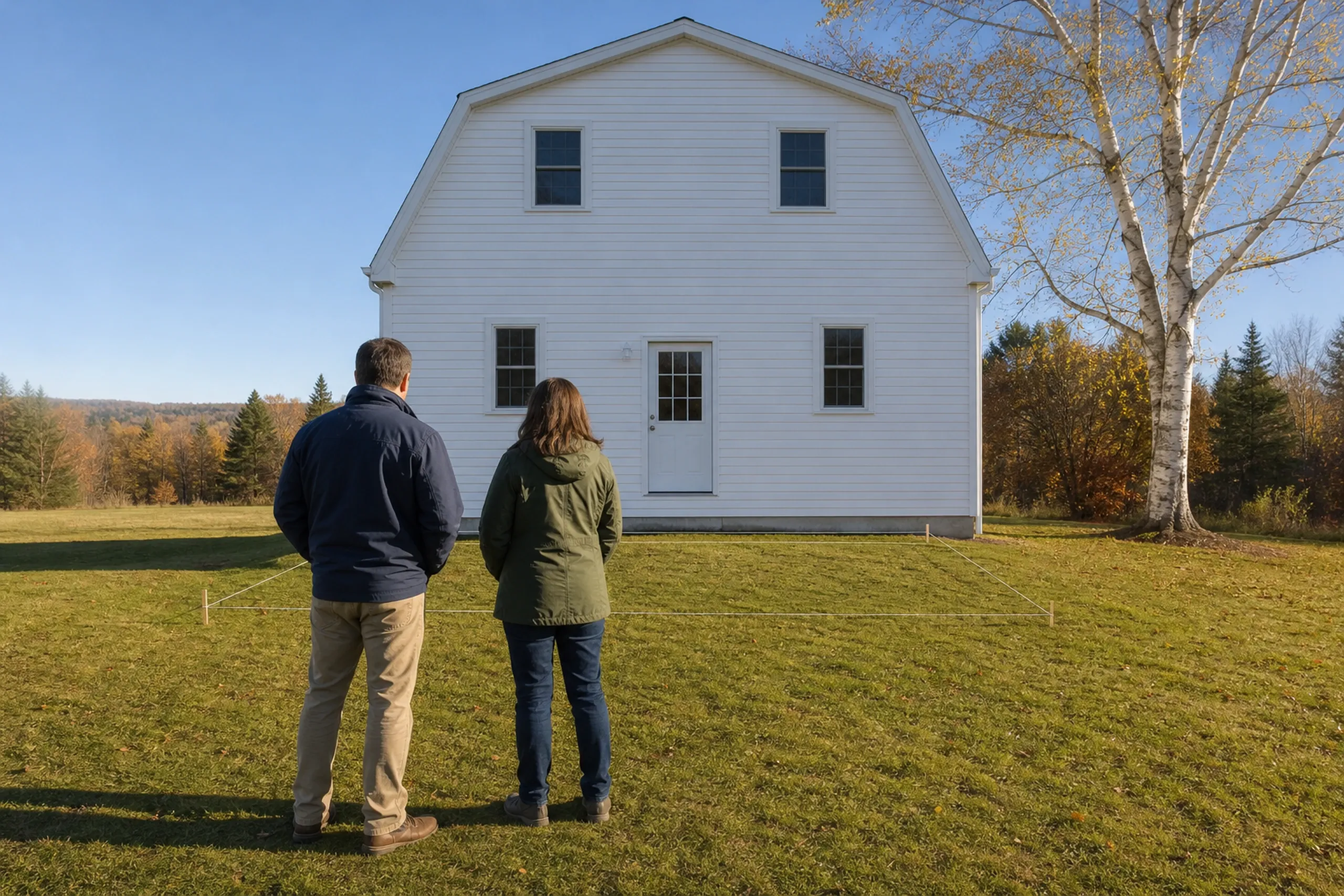
We read the site before the lumber list.
We look at the yard's slope, the wall where the ledger would bolt on, and any old deck or footings already there, since usable footings change the price.
A written price, then a signed contract.
The price names the lumber, the hardware and the railing, and the contract is signed before we start; Maine law requires a written contract on jobs over $3,000 and holds the down payment to one third.
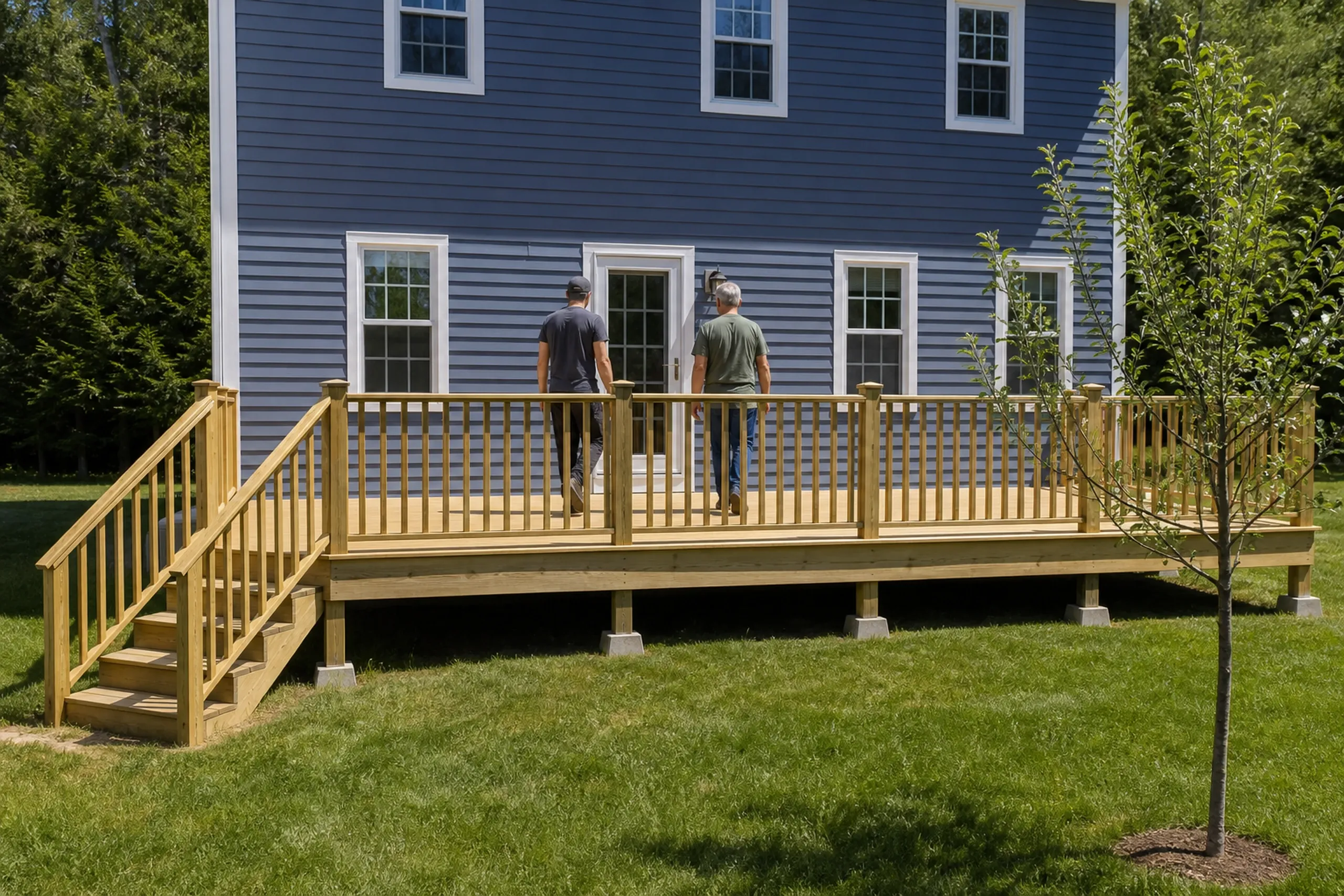
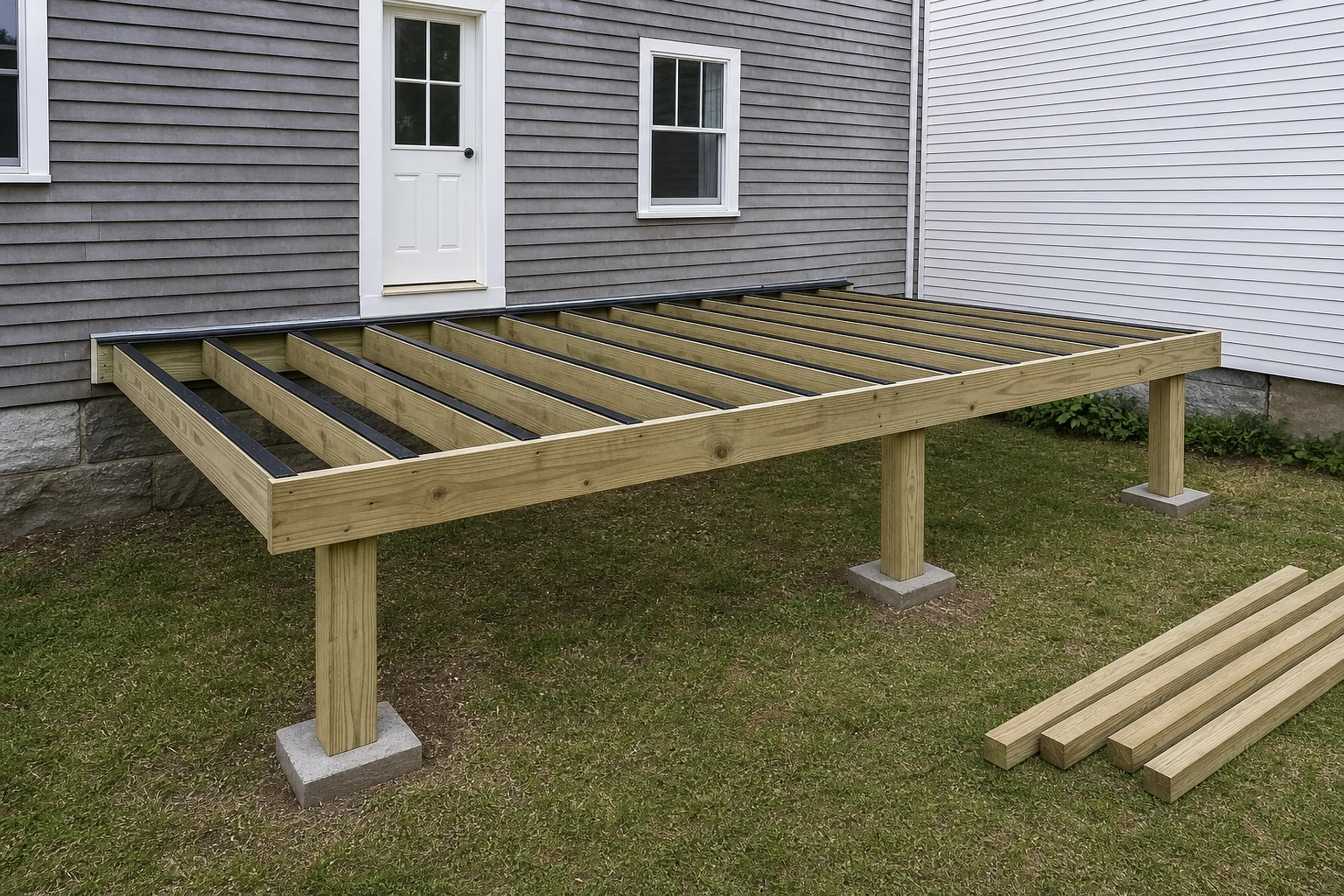
Ground up, then a walk together.
Piles or piers and the taped joists come before any decking, then the stairs and rail. You walk the finished deck with us, and we haul off whatever old deck came down.
When Do Pressure Treated Decks Make the Most Sense?
Pressure treated decks make the most sense when the budget leads and a sealer coat every couple of years does not bother you. They suit a homeowner who likes the look of real wood, or one who plans to sell in a few years and wants a sound deck without a composite price.
They make less sense if you already dread the stain brush, or if you plan to stay 20 years or more: wood decks we see are near the end by about 20 years, while composite boards carry maker warranties measured in decades.
Whatever the wood, we will not lay new treated boards over an old treated frame. We also will not set a deck on floating blocks (concrete blocks resting on the ground with no footing under them), however low the deck sits.
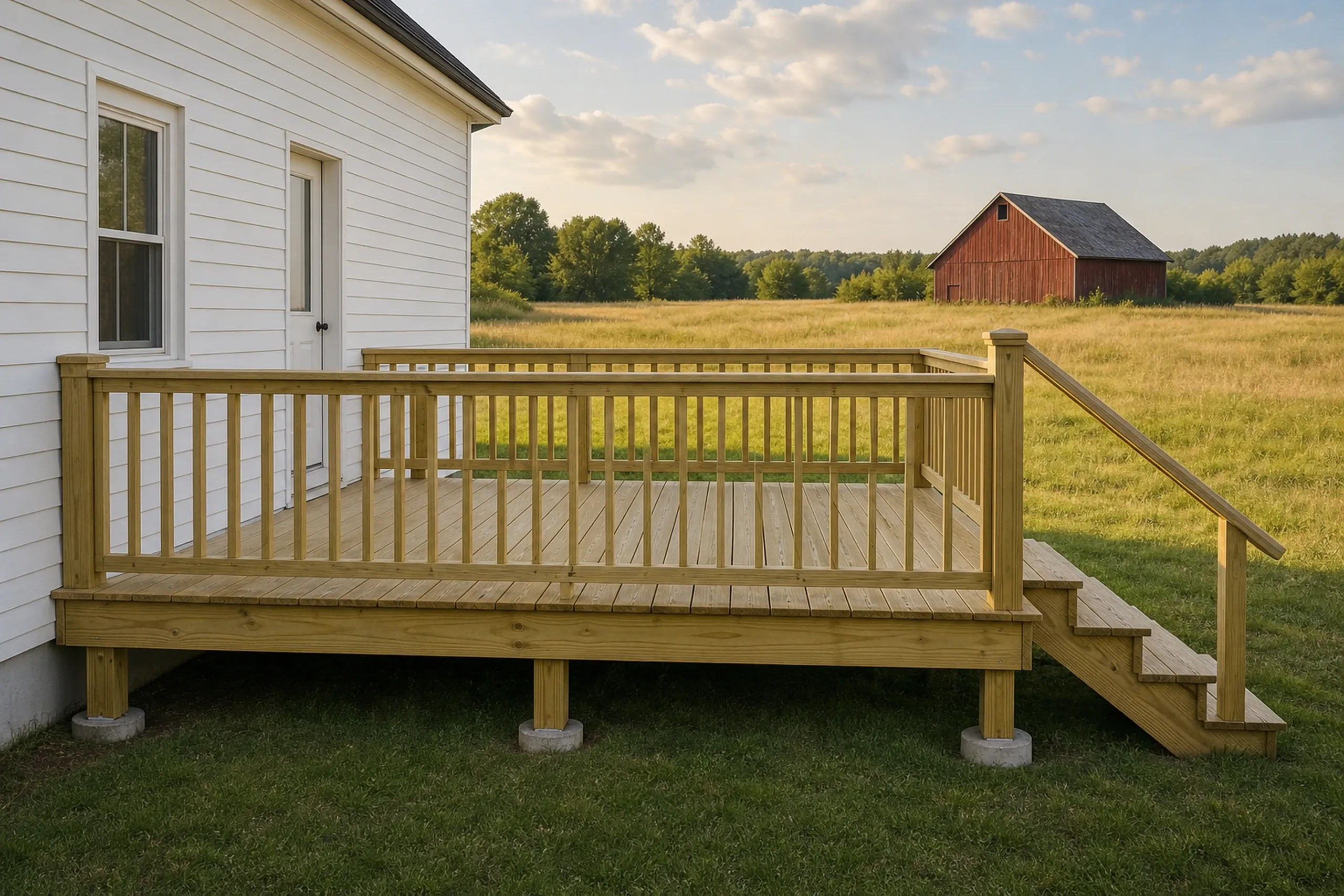
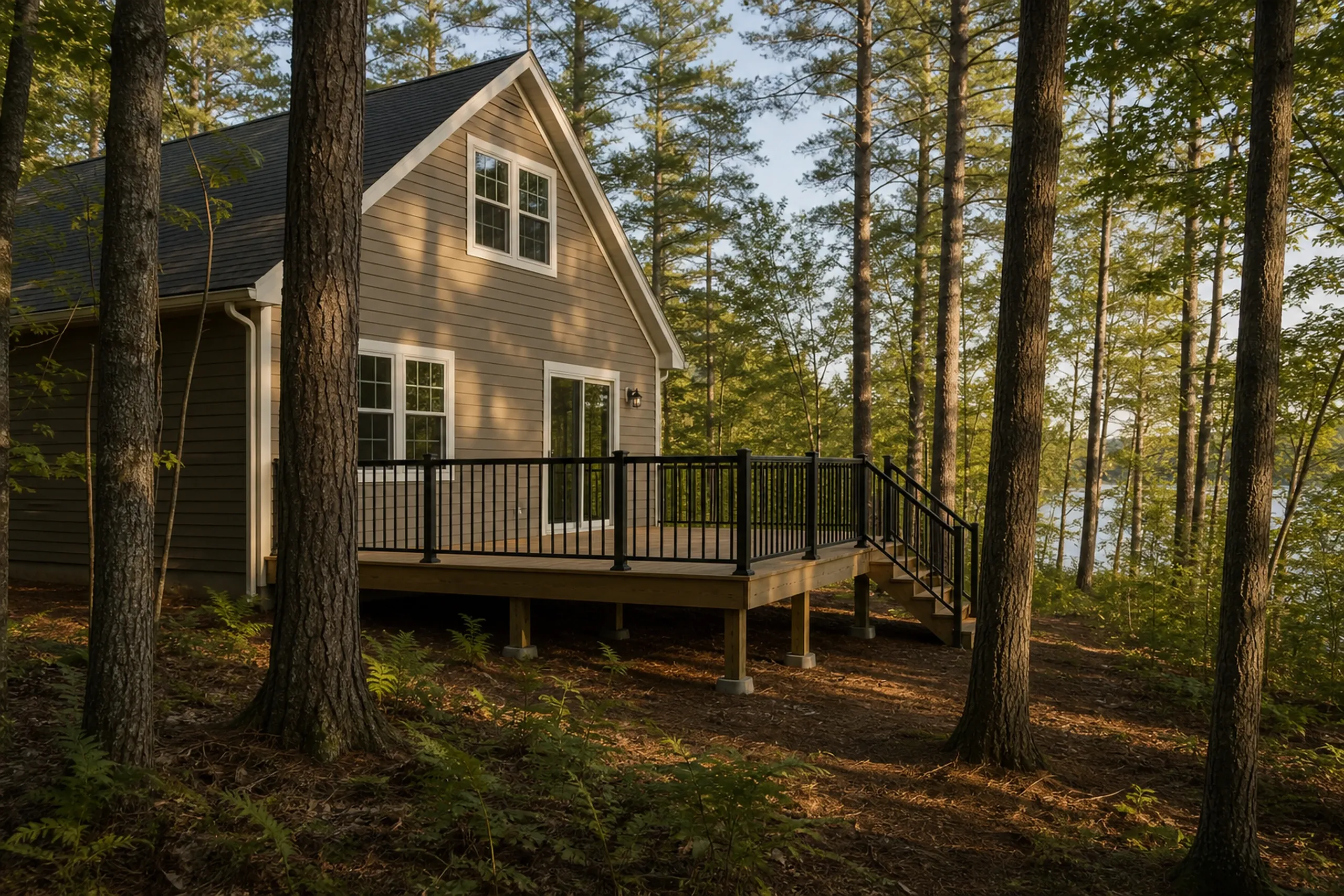
Who Should Build in Treated Wood, Where and When?
Who usually picks a treated wood deck?
The homeowners who usually pick a treated wood deck want the lowest price per square foot and the look of real wood, and they do not mind a sealer coat on a schedule. Many are replacing a treated deck that served them well.
Where does ground-contact lumber matter most on a deck?
Ground-contact lumber matters most at the posts and anywhere the frame sits within six inches of the soil. For the joists of a low deck, ask which rating went in: NADRA says UC3B remains code compliant for joists, while AWPA leaves that call to the designer.
When should a treated deck be built?
A treated deck should be built from late spring into early fall, with the footings in before the ground freezes. A deck finished by early summer has time to dry for its first coat of stain before snow covers it.
How Much Do Pressure Treated Decks Cost?
A simple pressure-treated deck costs about $80 per square foot in the Lewiston-Auburn area, and no full treated build comes in under $10,000. Both figures average many quotes and serve to test a budget, not to price your yard, and layouts with levels, angles or tie-ins average $100 to $120 per square foot.
| Deck | Average |
|---|---|
| Pressure-treated, simple layoutone level, a few steps, treated boards and treated rail | about $80 per sq ft |
| Full treated build, any sizenew footings, frame, boards, railing and stairs | nothing new under $10,000 |
| Bigger or more complex layoutlevels, angles, a wraparound, tie-ins, more stairs | $100 to $120 per sq ft |
Installed averages across many treated-deck quotes in this area, not a bid; height, a ramp and what an old deck hides can push a job up, and small decks run higher per foot.
Why is a 10x10 treated deck pricier per foot than a 12x16?
A 10x10 treated deck is pricier per foot than a 12x16 because its footings, stairs and ledger cost close to what the bigger deck's do. Moving up to the 12x16 often adds about $1,000, so the smaller deck is rarely the bargain it looks like.
What raises a treated deck price inside the range?
A treated deck price rises first with a ramp, then with the stairs and how many there are, then with whether there are footings worth keeping. After that come the layout's shapes, levels and tie-ins, and last the height, since staging past about 2 feet off the ground adds roughly a crew day.
Does a treated deck cost more over the years?
A treated deck does cost more over the years than its price shows, because a sealer coat comes due about every two years on Viance's advice. We still recommend treated wood wherever that trade fits the house and the budget.
How Do You Get a Treated Deck Priced?
You get a treated deck priced by asking for a free estimate: we come out, walk the yard and the house wall, and write down the footings, the lumber and the number. The estimate is yours to keep whether or not we build the deck.